

 English
 中文简体

ANGSHEN
ANGSHEN
ANGSHEN
ANGSHEN
ANGSHEN
ANGSHEN
ANGSHEN
ANGSHEN
ANGSHEN
ANGSHEN
ANGSHEN
ANGSHEN
ANGSHEN
ANGSHEN
ANGSHEN
ANGSHEN

China Manganese Tablets for Aluminum Alloying: A Supplier Selection Guide
Content
A 3105 heat that taps at 0.62% Mn against a 0.50–0.60% window is rarely a metallurgical mystery. It is usually a tablet that never fully dissolved. Manganese tablets exist for exactly that situation: they let a melt shop trim manganese into the furnace at 730–760 °C without waiting on a hard-melting addition, and without paying for the aluminium bundled inside a 10% or 20% Al-Mn master alloy.
The short answer for buyers: judge a China manganese tablets supplier on three verifiable points — a stated Mn range with the assay method behind it, a dissolution claim you can reproduce in your own furnace, and moisture and packing control that survives a sea container. Price per kilogram matters, but it is the third or fourth question, not the first, because a tablet that costs you 8% recovery is more expensive than a 5% price difference.
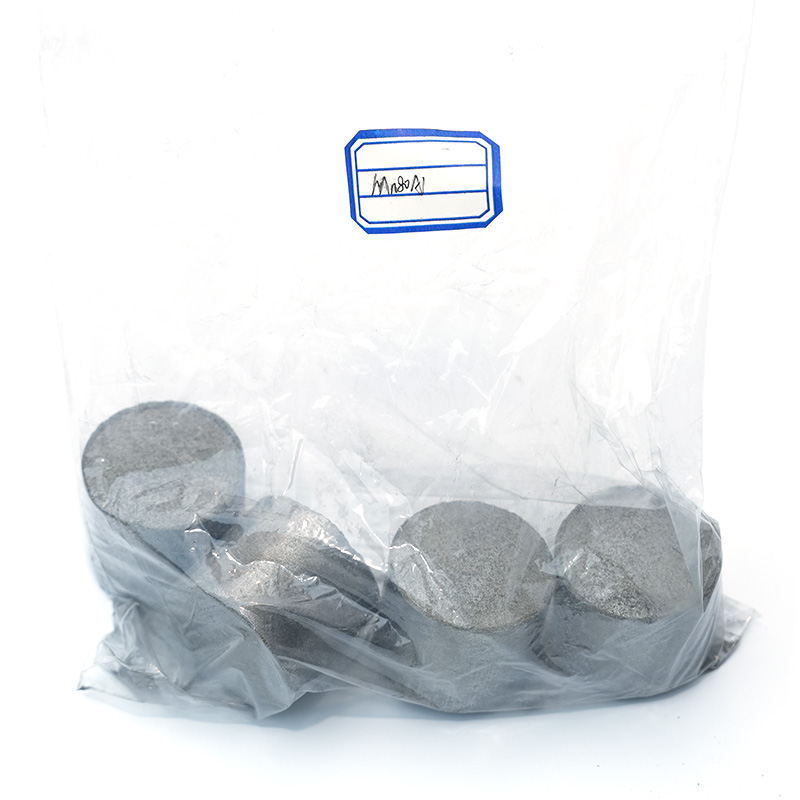 Manganese Tablets for Aluminum AlloyingCompacted manganese additives for 3000-series alloying, with 500 g standard tablets, custom weights, and ≥90% recovery for melt control.View Product →
What follows covers what the tablets are, how feeding practice changes recovery, which alloy families justify them, and the checks worth running before a purchase order.
Why Manganese Tablets Beat Hard Manganese in the Furnace
Electrolytic manganese flake runs about 99.7% Mn and melts near 1244 °C. A typical aluminium melt sits at 720–760 °C, so flake manganese does not melt — it dissolves slowly from the surface inward. In practice that means long stirring, a real chance of undissolved particles reporting to the dross, and a recovery figure that moves from heat to heat.
Aluminium-manganese master alloy avoids the melting point problem because the manganese already arrives in solution. The cost is dilution: a 20% Mn master alloy delivers one part manganese and four parts aluminium, and you pay to melt both.
Tablets sit between the two. They are compacted blends of manganese-bearing powder with dissolution aids, typically carrying 75–85% Mn, pressed dense enough to break through the oxide skin and sink rather than float. Powder gives the melt far more contact area than flake, and densification keeps the tablet in the metal instead of in the dross layer.
Where they fall short: tablets still need heat and movement. Drop them into a 690 °C melt with no stirring and you get slow, incomplete dissolution and a manganese reading that keeps creeping upward for twenty minutes — or never arrives.
What a China Manganese Tablets Supplier Should Document
Ask for the specification sheet before discussing price. A supplier who has actually pressed the tablets will send it without a follow-up email, and it should answer most of the points below.
| Parameter | What to ask for | Why it matters |
|---|---|---|
| Mn content | Guaranteed minimum with a stated tolerance band, not "about 80%" | Sets your addition weight; lot drift shows up later as off-spec heats |
| Assay method | ICP-OES or certified wet chemistry, tested per lot | Tells you the number is measured rather than assumed from raw material |
| Tablet weight and size | Standard or customer-specified weight, with a tolerance | Controls sinking and dissolution speed; consistent weight makes addition arithmetic reliable |
| Dissolution claim | Recovery percentage at a stated temperature and stir time | The only claim that matters — repeat the test in your furnace |
| Moisture control | Drying before packing, sealed inner liner, desiccant | Moisture causes caking and hydrogen pickup in the melt |
| Packing | 25 kg drum or big bag with liner, stated for export | Fines and broken tablets from transit damage reduce recovery and create dust |
| Quality system | Certified QMS such as GJB9001C, with scope | Signals process control and traceability rather than a trading relationship |
| Production capacity | Plant area, number of tablet lines, custom batch capability | Determines whether custom weights and small lots are realistic |
A producer with 48,000 m² of standardised workshop space and a dedicated metal tablet line can usually handle both large tonnage and small custom blends. A trader cannot, because the tablet press is not theirs — and that difference shows up in how fast a non-standard tablet weight can be quoted.
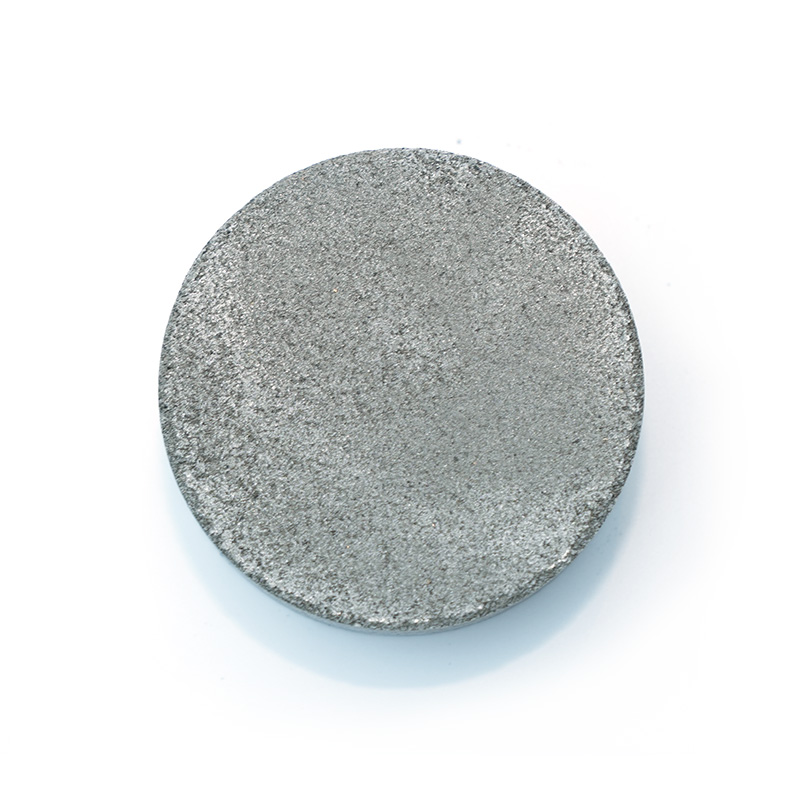 Pressed Aluminum Alloying Additive TabletsSeven single-element tablet families with 500 g standard weight and dual grades, supporting composition control across Mn, Fe, Cr, Ti, Si, Cu and Zr.View Product →
Feeding Practice That Decides Your Recovery
Two buyers can run the same drum and report 88% and 96% recovery. The difference is in the furnace, not the packaging.
Temperature and timing
Add at 730–760 °C, once the melt is fluid but before final degassing, so any hydrogen picked up during the addition can still be removed. Below 700 °C dissolution slows sharply. Above 780 °C manganese oxidises and you lose it to the dross.
Placement and stirring
Feed into the moving stream or through a plunger bell, then stir three to five minutes without pulling a deep vortex. Tablets left resting on the surface dissolve into the oxide layer, not into the metal.
Sludge and settling
Manganese combines with iron, chromium and silicon to form (Fe,Mn)3SiAl12 sludge, which drops out below roughly 700 °C. Hold above that line, avoid long furnace holds before casting, and allow 5–10 minutes settling before sampling.
Addition arithmetic
For 1% Mn in a 10-tonne melt you need 100 kg of manganese. At 80% Mn that is 125 kg of tablets; at 92% recovery, about 136 kg. Write your recovery figure into the process sheet and re-check it every few lots — it is the number that turns a specification into a cost.
Which Alloys Justify Manganese Tablets
Tablets are not a universal answer. They are strongest where you need controlled trimming into a narrow window, and weaker where very large manganese additions are required.
- 3003 and 3105: manganese at 1.0–1.5% and 0.30–0.80% respectively; tablets handle trim additions without diluting the melt with extra aluminium.
- 3004 and other 3xxx can alloys: manganese works alongside magnesium, and recovery consistency matters more than speed.
- 6061 and the 6xxx family: manganese is a minor addition, usually well under 0.15%, where a master alloy tends to overshoot.
- High-manganese or very tight-tolerance heats: an Al-Mn master alloy still earns its place, because the manganese arrives pre-dissolved and the analysis is easier to predict.
One related point: tablet chemistry and melt cleanliness belong together. Manganese added to a dirty melt ends up in inclusions rather than in solution, which is why shops adding tablets often pair them with a refining step. A granule refining flux introduced around the addition helps separate the oxide and gas that would otherwise capture the manganese — see our guide to choosing aluminum alloying additive tablets for the matching logic across elements.
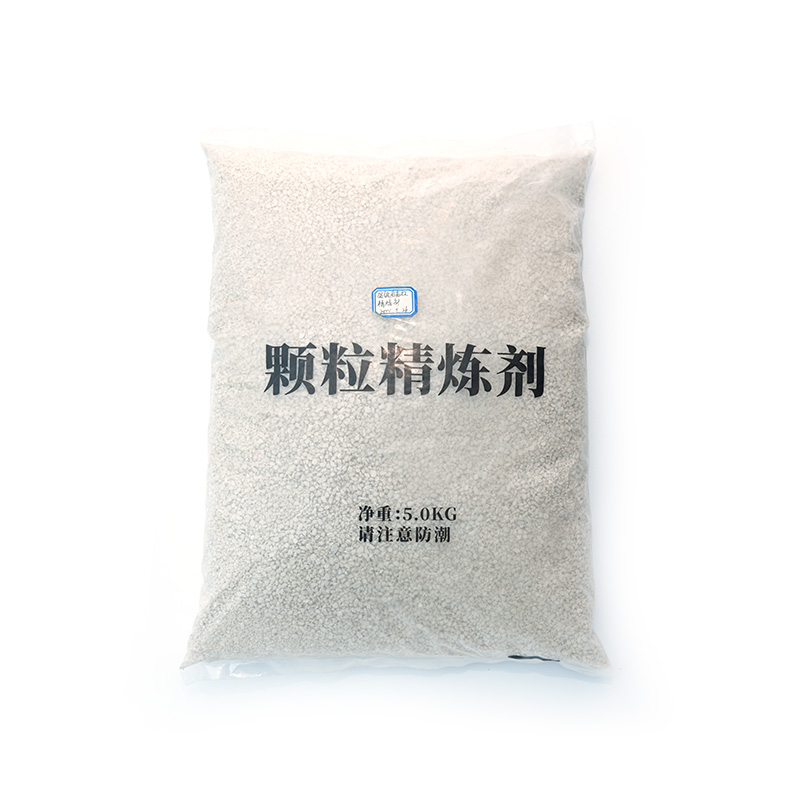 Granule Refining Flux for Aluminum MeltsSmokeless granular refining flux for removing oxide inclusions and slag, with 0.08–0.15% addition to support cleaner aluminum melts.View Product →
Supplier Checks and Common Purchasing Risks
Most failures in this category are mundane and preventable. In rough order of how often they appear:
- Moisture and caking after a humid port call — clumped tablets and a dust layer at the drum bottom both change dissolution.
- Lot-to-lot manganese drift with no per-lot certificate, discovered only in the furnace.
- Fines and broken tablets from shipping damage; specify packing and inspect on arrival.
- Samples drawn from a lab batch instead of the production run that will actually ship.
- Minimum order quantities that rule out small custom tablet weights.
Verify the plant, not only the certificate. A short audit, virtual or on site, should show the tablet press, the drying and packing line, and the QC bench where manganese is assayed. Our factory profile lists the equipment layout and is a useful baseline for that comparison.
FAQ
What manganese content do the tablets carry?
Most compacted tablets run 75–85% Mn, with 80% a common working figure. Ask for the guaranteed minimum and the assay method; a bare "80%" without a tolerance band is not a specification.
Can tablets replace an Al-Mn master alloy entirely?
For trim and small additions, usually yes. For heats needing more than about 1.5% Mn, or where the analysis window is very narrow, a master alloy remains more predictable. Many shops keep both on the floor.
What recovery should I expect?
Operations with correct temperature, stirring and settling commonly report 90–95%. Treat any higher claim as something to prove in your own furnace before it enters a costing sheet.
Do I need a refining step as well?
Not always. But if the melt is high in oxide or gas, manganese that would otherwise stay in solution can finish up in the dross, and a refining flux added around the same time improves the odds.
Buy manganese tablets on documented chemistry, a tested dissolution claim and packing that survives the trip, in that order. Request a sample from the production lot, run a recovery trial on one heat, and write the result into the process sheet. A supplier who welcomes that trial is the one worth keeping.
If you have a target Mn range, a melt weight and a furnace temperature, that is enough to size the addition and quote it — send those three numbers together with the tablet weight you want, and the trial can be arranged before the first drum ships.
PREV:Custom Flux for Aluminum Factory: Matching Chemistry to Your Melt and FurnaceNEXT:China Flux for Aluminum Factory: Applications, Selection Criteria, and Practical Guidance
Interested in cooperation or have questions?

- Quick Link
- HOME
- PRODUCTS
- NEWS
- SOLUTION
- CONTACT US
- Contact information
-
-
wmfan0222@163.com

-
+86-13167461999

+86-18252891222(WhatsApp) -
+86-0513-88275999

-
No.19 HeshunHaian Economic Development Zone, Nantong, Jiangsu, China

-

