

 English
 中文简体

ANGSHEN
ANGSHEN
ANGSHEN
ANGSHEN
ANGSHEN
ANGSHEN
ANGSHEN
ANGSHEN
ANGSHEN
ANGSHEN
ANGSHEN
ANGSHEN
ANGSHEN
ANGSHEN
ANGSHEN
ANGSHEN

Custom Flux for Aluminum Factory: Matching Chemistry to Your Melt and Furnace
Content
- 1 Where an Off-the-Shelf Flux Stops Working
- 2 The Data That Turns a Catalog Product Into a Custom Flux
- 3 What a Formulator Actually Adjusts
- 4 Dross and Metal Loss: The Half of Flux Cost Nobody Quotes
- 5 A Trial Protocol That Gives a Defensible Answer
- 6 Batch Consistency, Documentation and Supply
- 7 Frequently Asked Questions
A plant charging 35–45% clean process scrap into a 6061 melt often reports the same three complaints: calcium creeping past 0.02%, hydrogen sitting at 0.25 ml/100 g, and dross still carrying nearly half its weight in trapped metal. Buying a stronger general-purpose refining flux tends to fix one of those and quietly make another worse, because each symptom belongs to a different part of the flux chemistry rather than to a single "activity" number.
The short answer: custom flux for an aluminum factory is a written specification, not a stock item. Salt ratio, fluoride level, particle size, moisture limit and dosing rate should all be set against your alloy mix, charge composition and casting route. Get that matching right and most plants recover the formulation effort through lower metal loss and fewer rejects within one or two production campaigns.
Where an Off-the-Shelf Flux Stops Working
Melt treatment in an aluminum plant covers four jobs at once: removing oxides and hydrogen, holding alkali metals such as calcium and sodium inside specification, releasing trapped metal from dross, and protecting the bath surface between casts. A single salt blend can do all four at a moderate level. The difficulty is that no two plants need "moderate" on all four, and pushing one property usually costs another.
- Alloy family. 5xxx and 7xxx grades are sodium-sensitive, so a sodium-bearing refining flux can lift sodium even while it cleans the bath.
- Charge mix. Painted or heavily oxidized scrap raises calcium and iron, which shifts priority toward calcium removal and away from general refining.
- Furnace geometry. A large open reverberatory bath loses active salt at the surface; a crucible furnace concentrates contact but limits stirring, so residence time matters more than raw reactivity.
- Casting route. DC casting is judged on inclusion count and hydrogen; die casting is judged on fluidity, dross texture and die life.
- Storage climate. Flux is hygroscopic. In humid warehouses, sealed packaging and a verified moisture specification, commonly ≤0.1%, matter as much as chemistry.
The Data That Turns a Catalog Product Into a Custom Flux
A supplier cannot formulate blind. The gap between a quote that works and a bag that sits in the stores is usually the quality of the specification sheet you send. Six groups of data are enough to start a serious discussion:
- Alloy grades and monthly tonnage for each grade, including any intermittent high-magnesium work.
- Charge composition: primary ingot share, scrap share, coating type, and whether turnings or chips are charged.
- Furnace type, capacity, melt and holding temperatures, and typical time from charge to cast.
- Current and target levels for calcium, sodium, iron, magnesium, hydrogen and inclusion count, with the sampling method behind each figure.
- Existing treatment: rotary degassing, filter type, grain refiner practice, and any cover flux already in use.
- Dross rate and assay, dosing equipment, packaging preference, storage conditions, and the documentation the quality team requires.
Every item on that list is measurable in the plant within a shift. If a supplier cannot state which salt system and which dose band they recommend for those numbers, the order is guesswork from both sides.
What a Formulator Actually Adjusts
Most aluminum fluxes are built on a NaCl–KCl salt system, and the ratio between the two salts sets the melting range and the fluidity of the slag. Fluoride-bearing additions — cryolite, calcium fluoride, fluosilicate — dissolve the oxide skin and improve slag–metal separation, but too much attacks refractory, increases fume, and shortens crucible life. Chemistry alone is only half the specification; three physical parameters decide how the blend behaves on the shop floor.
Particle size, moisture and delivery form
Injection equipment needs free-flowing granules in roughly the 0.2–1.5 mm range with minimal fines, because dust below 0.2 mm clogs rotors and burns off before it reaches the melt. Manual plunging calls for tablets that sink and disintegrate predictably rather than floating and oxidizing on the surface. A custom blend therefore fixes three things at once: salt composition, size distribution and moisture, since a flux that gained 0.4% moisture in an unsealed store will spatter and gas regardless of how good the chemistry is.
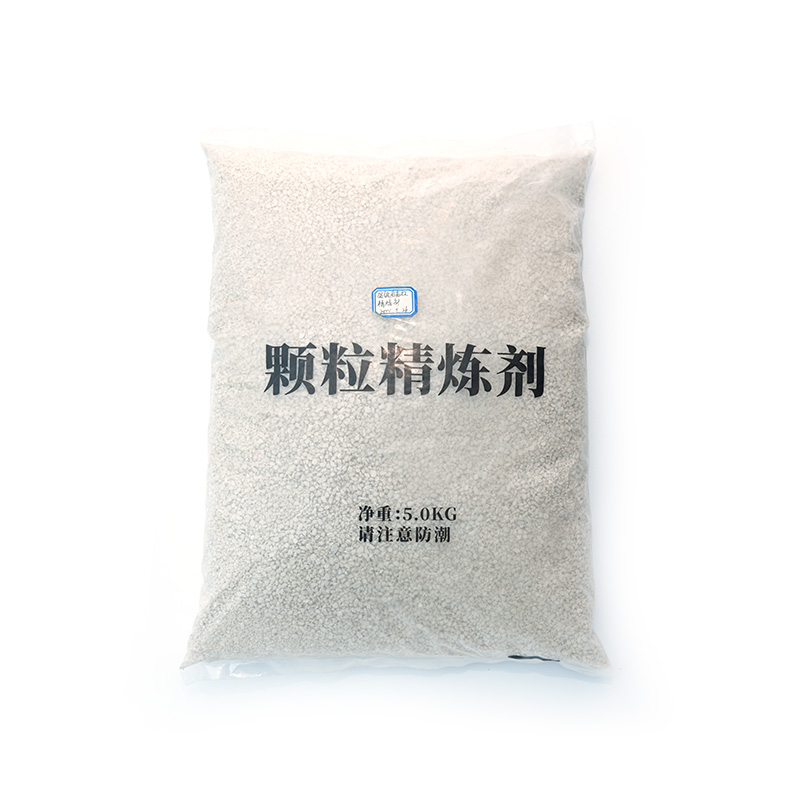 Granular Refining Flux for Aluminum Alloy MeltsGranular refining flux for aluminum melts suited to free-flowing manual or mechanical addition and forming removable dry slag at 700–720°C and above.View Product →
Alkali control is a separate line of adjustment. A calcium remover reacts with calcium already dissolved in the melt, and its efficiency depends on how much slag the reaction generates and how long the metal is held afterwards. Overdosing does not simply waste material; it adds slag volume, ties up metal in the skimming, and can shift other trace elements.
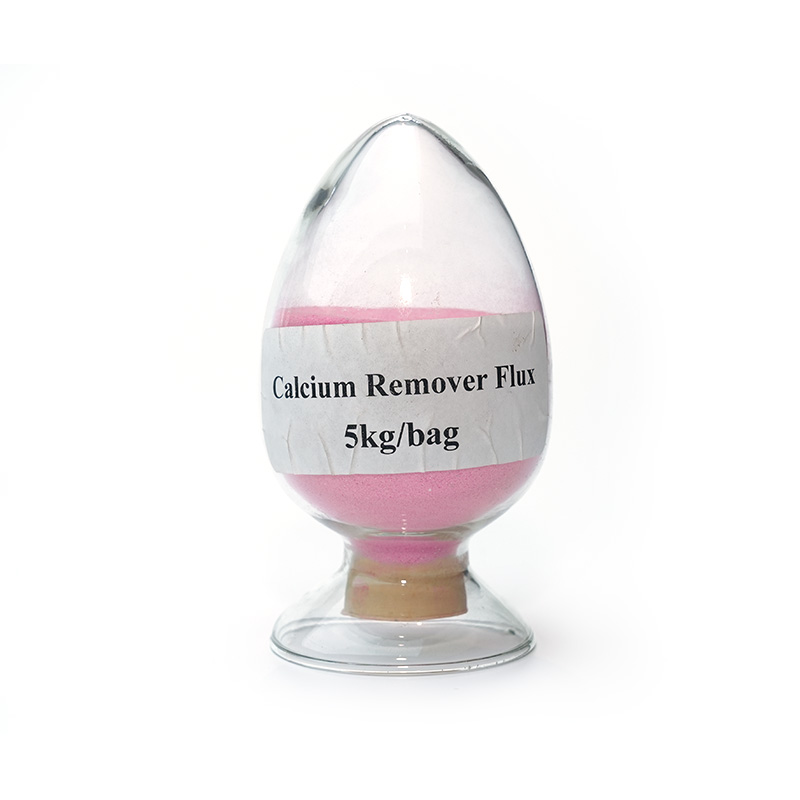 Calcium Remover Flux for Aluminum Alloy MeltsFlux for precise calcium removal from aluminum melts at 710–740°C, dosed according to actual calcium content and supplied in 5 kg bags.View Product →
For sodium-sensitive alloys, the entire salt system has to change rather than a single ingredient being reduced. That is the clearest example of why a custom specification beats a generic "low-sodium" claim on a datasheet.
Dross and Metal Loss: The Half of Flux Cost Nobody Quotes
Furnace buyers compare price per kilogram. Melt shop managers should compare cost per tonne of saleable metal, and dross is where the difference hides. On a 20-tonne heat with a 2% dross rate, roughly 400 kg of dross leaves the furnace; at 55% trapped metal that is about 220 kg of aluminum going out of the door. A dross-separating flux that lifts recovery to 70% returns around 60 kg per heat — several times the value of the flux consumed, before any refractory or labor savings are counted.
The formulation work sits in slag density and fluidity plus exothermic strength: the slag must stay liquid long enough for droplets to coalesce, then release cleanly from the skimming tool instead of wetting it. That balance differs between a large reverb furnace skimmed once per shift and a small crucible skimmed after every heat.
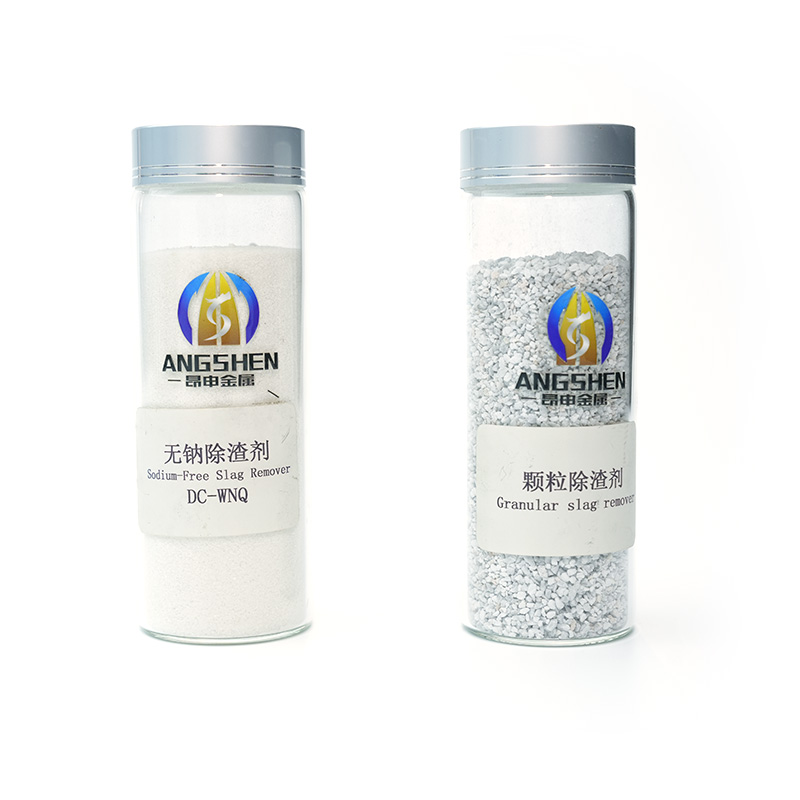 Dross Separating Flux for Aluminum MeltingDrossing flux for die-casting and recycled aluminum melts above 700°C, helping separate oxide slag and produce dry, loose skimmable dross.View Product →
A Trial Protocol That Gives a Defensible Answer
Run one baseline heat and three treated heats on the same alloy and the same cast route. Sample at furnace tap and at the casting station, and keep the sampling tools and degassing practice identical throughout, otherwise the trial measures the operator rather than the flux. Judge the result on four numbers: density index from a reduced pressure test, inclusion count from metallographic or filtration analysis, spectrometer readings for calcium and sodium, and a remelt assay of the skimmed dross.
- If calcium falls less than 0.002% at a 0.2% dose, the issue is formulation or contact time, not the operator.
- If inclusions improve but hydrogen does not, the blend is cleaning oxides without enough gas-release action.
- If dross metal content improves while skim weight grows, the dose is too high for the slag volume it creates.
Batch Consistency, Documentation and Supply
A custom blend is only useful if batch five behaves like batch one. Ask for a certificate of analysis per batch, a retained sample protocol, a particle size certificate and a moisture test, and confirm that the supplier runs dedicated flux capacity rather than blending in a shared line. Nantong Angshen Metal Materials operates a 48,000 m² plant with three automated master alloy lines, one metal tablet line and one flux line, and holds GJB9001C quality management system certification, which means alloying additives and melt treatment can be sourced against one specification sheet. If your furnace runs several alloys, combined programs are worth reviewing through the available custom flux and alloying programs, since calcium control and grain refinement often interact.
Frequently Asked Questions
How small can a custom flux batch be?
Trial batches well below one tonne are normal, because the cost sits in formulation and testing rather than in the salt itself. Expect to pay a premium on the trial order and to see it disappear at production volumes.
Is a sodium-free flux always better?
No. It matters for 5xxx and 7xxx work and for plants already fighting sodium pickup. For many 6xxx and die-casting operations a sodium-bearing system performs better and costs less, provided the addition rate is controlled.
What dose should I expect?
Refining fluxes typically run at 0.1–0.3% of melt weight, dross-separating fluxes at 0.2–0.5% of dross weight or per surface layer. The correct figure comes from a trial, not from a table, because bath depth and skim practice change the effective contact time.
Does a custom blend cost more per kilogram?
Usually 5–15% more than a catalog equivalent. Measured per tonne of conforming casting, it is often cheaper once metal recovery, reject rate and refractory wear are included.
Treat custom flux as an engineering input: define the melt problem in numbers, let the salt system and particle size follow from those numbers, then verify with a controlled trial before committing to volume. If you have current calcium levels, dross assays and furnace data on hand, send your melt data to our technical team and the recommended dose band can be narrowed down before a single bag is opened.
PREV:Alloy Tablet vs Master Alloy Cost Comparison: Which Adds Cheaper Titanium?NEXT:China Manganese Tablets for Aluminum Alloying: A Supplier Selection Guide
Interested in cooperation or have questions?

- Quick Link
- HOME
- PRODUCTS
- NEWS
- SOLUTION
- CONTACT US
- Contact information
-
-
wmfan0222@163.com

-
+86-13167461999

+86-18252891222(WhatsApp) -
+86-0513-88275999

-
No.19 HeshunHaian Economic Development Zone, Nantong, Jiangsu, China

-

