

 English
  中文简体
中文简体 
ANGSHEN
ANGSHEN
ANGSHEN
ANGSHEN
ANGSHEN
ANGSHEN
ANGSHEN
ANGSHEN
ANGSHEN
ANGSHEN
ANGSHEN
ANGSHEN
ANGSHEN
ANGSHEN
ANGSHEN
ANGSHEN

Aluminum Melting Additives Guide: Tablets, Master Alloys, and Fluxes for Better Recovery
Content
- 1 The Three Families of Aluminum Melting Additives
- 2 Master Alloys: High Recovery for Elements That Resist Dissolution
- 3 Alloying Tablets: Precise Dosing Without the Heavy Lift
- 4 Fluxes: Clean the Melt Before You Alloy It
- 5 Matching Additives to Melt Temperature and Alloy
- 6 A Purchase Checklist Before You Commit
- 7 Frequently Asked Questions
A 12-tonne aluminium melt sits at 735 °C, 200 kg of manganese tablets go in, the furnace holds for ten minutes, and the spectrometer still comes back 0.12% low on manganese. Ordering more tablets rarely fixes that. The useful questions are narrower: what was the melt temperature at the moment of addition, where were the tablets dropped, and how long did the bath actually hold before sampling? In most plants, those three variables decide recovery long before the grade of additive does.
The working rule for aluminum melting additives is straightforward. Match the form to the element, match the addition point to the melt temperature, and clean the melt before you try to alloy it. Tablets give accurate, low-fume dosing of a single element such as Mn, Fe, Cu, Ti, Cr or Zr. Master alloys deliver elements that resist dissolution on their own. Fluxes remove the oxides, hydrogen and tramp elements that quietly steal recovery from both.
Everything below follows that rule, with the temperature windows, recovery ranges and purchasing checks that decide whether an addition ends up in the specification or in the dross.
The Three Families of Aluminum Melting Additives
Almost every additive used in an aluminium melting shop falls into one of three groups. They are not interchangeable, and they are not priced the same way. A master alloy costs more per kilogram of contained element than a tablet, but it recovers more of that element. A flux contains no alloying element at all, yet it protects the recovery of everything added after it.
| Family | Typical form | Primary job | Watch out for |
|---|---|---|---|
| Master alloys | Ingots, waffle plates, rods | Adds Ti, B, Sr, Zr, Cr, V in pre-alloyed form | Needs enough superheat; dense particles can settle |
| Alloying tablets | Pressed discs or briquettes, 30-200 g | Adds one element (Mn, Fe, Cu, Ti, Cr, Si, Zr) | Moisture pickup; the carrier adds a little slag |
| Fluxes | Granules, powders, white tablets | Refining, degassing, dross separation, Ca or Mg removal | Overdosing attacks refractory and adds fumes |
Recovery is the number that governs cost per tonne of finished metal. The chart below shows indicative ranges seen in routine foundry practice; the spread inside each family comes mostly from temperature control and dosing method rather than from the supplier.
Typical element recovery by additive form under normal furnace conditions.
Master Alloys: High Recovery for Elements That Resist Dissolution
Titanium, boron, zirconium, chromium and vanadium all melt far above aluminium. Drop the pure metal into a 730 °C bath and a large share of it sinks, oxidises, or simply sits in the bottom sludge until the furnace is cleaned. Pre-alloying the element with aluminium, usually at 3-10% of the hard element in an aluminium matrix, lowers the effective melting range and locks the element into an intermetallic phase such as TiAl3 or TiB2 that dissolves predictably in the bath.
Aluminium-titanium-boron is the workhorse of grain refinement, typically added at 1-3 kg per tonne of melt depending on casting method and section thickness. Aluminium-strontium does a different job: it modifies the eutectic silicon in Al-Si casting alloys so the structure becomes finer and more ductile. Aluminium-boron works in the opposite direction, scavenging Ti, V and Cr from electrical conductor grades to bring conductivity back up, while aluminium-zirconium raises heat resistance in conductor and elevated-temperature applications.
The recovery advantage is real, but it depends on superheat. Grain refiners added above roughly 750 °C tend to agglomerate, and the refinement fades within minutes of holding. Add them late, in the transfer ladle or launder where the practice allows.
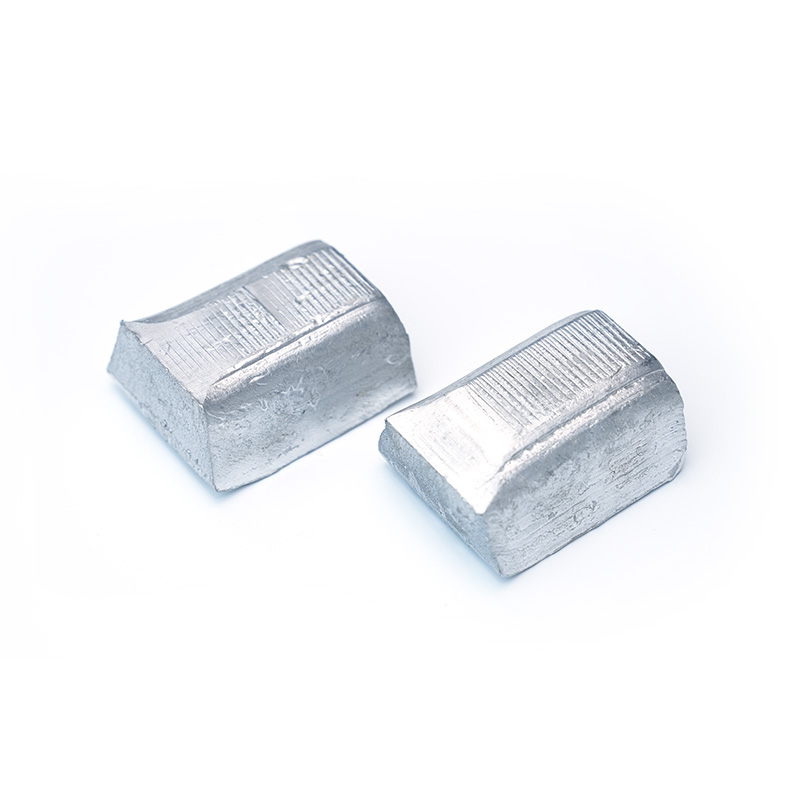 Aluminum Titanium Boron Master Alloy Grain RefinerGrain refiner with Ti5B1, Ti5B0.2, and Ti3B1 grades, supplied as sticks, coils, waffle ingots, or cast cut bars for aluminum alloys.View Product →
Alloying Tablets: Precise Dosing Without the Heavy Lift
An alloying tablet is a pressed disc, usually 30 g to 200 g, made from the element powder plus a carrier that adjusts density and helps the disc break up below the melt surface. Because every tablet carries a known weight of the element, the operator counts tablets instead of trying to weigh powder into a ladle beside a 740 °C furnace. A 100 g tablet with 75% manganese content delivers 75 g of manganese, and twenty of them deliver 1.5 kg. Shift to shift, that consistency is worth more than a marginally lower price per kilogram.
The matching question is which carrier and which element density suit your alloy. Manganese tablets go into 3003 and 3104 can-body stock, iron tablets into Al-Fe and die-casting alloys, copper tablets into 2xxx and Al-Si-Cu foundry grades, with titanium, chromium and zirconium tablets covering grain refinement and transition-element additions. If you are unsure which grade fits a specific melt, this breakdown of aluminum alloying tablets by alloy system is a practical starting point.
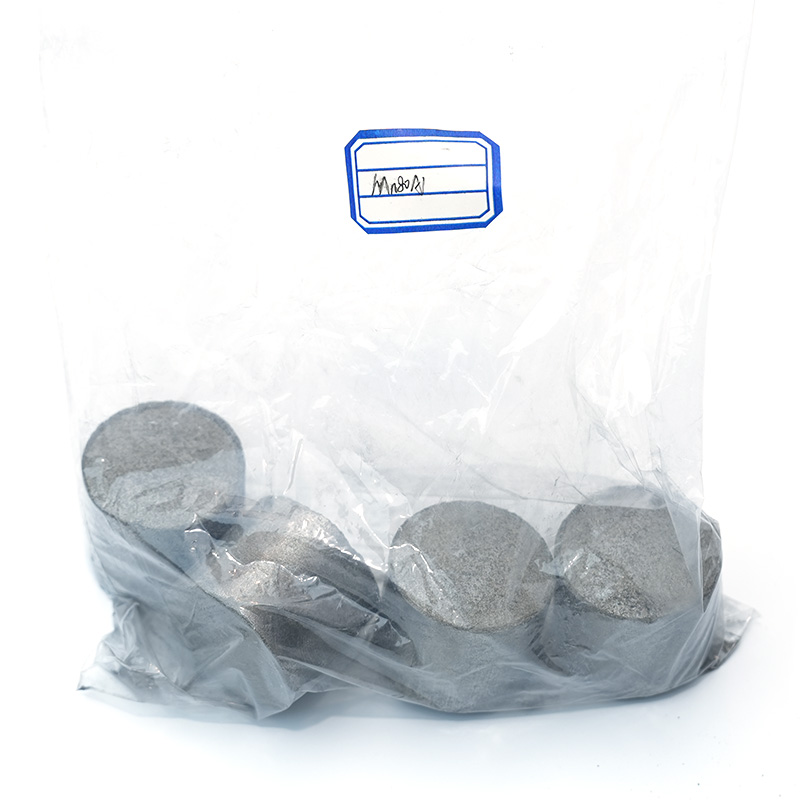 Manganese Tablets for Aluminum Alloying and Composition ControlCompacted manganese additives for precise Mn control in 3003/3104 and other aluminum melts, with 500 g tablets and high recovery.View Product →
Two constraints are worth repeating. First, tablets pick up moisture, and moisture means hydrogen porosity in the casting. Keep drums sealed, off the floor, and away from the furnace mouth. Second, the carrier is not free: it produces a small volume of extra slag per addition, which matters when you are dropping several kilograms into a small crucible furnace rather than a 20-tonne reverb.
Fluxes: Clean the Melt Before You Alloy It
Most recovery losses blamed on additives actually start before the additive goes in. An oxide skin, suspended inclusions and dissolved hydrogen all interfere with dissolution and with the accuracy of the sample you take afterwards. That is why the sequence in a well-run melt shop is flux first, grain refiner second, alloying tablets or hardener third, and a short final refining pass only if the alloy tolerates it.
A granule refining flux is injected or plunged to strip hydrogen and float out non-metallic inclusions. Drossing flux separates entrapped aluminium from the dross so less metal leaves the furnace in the skimming bucket. Calcium remover flux matters when scrap pushes calcium above the limit in foundry alloys, magnesium depletion flux brings 5xxx and high-magnesium melts back into range, and sodium-free refining flux is used where sodium is restricted because of its effect on hot ductility and edge cracking.
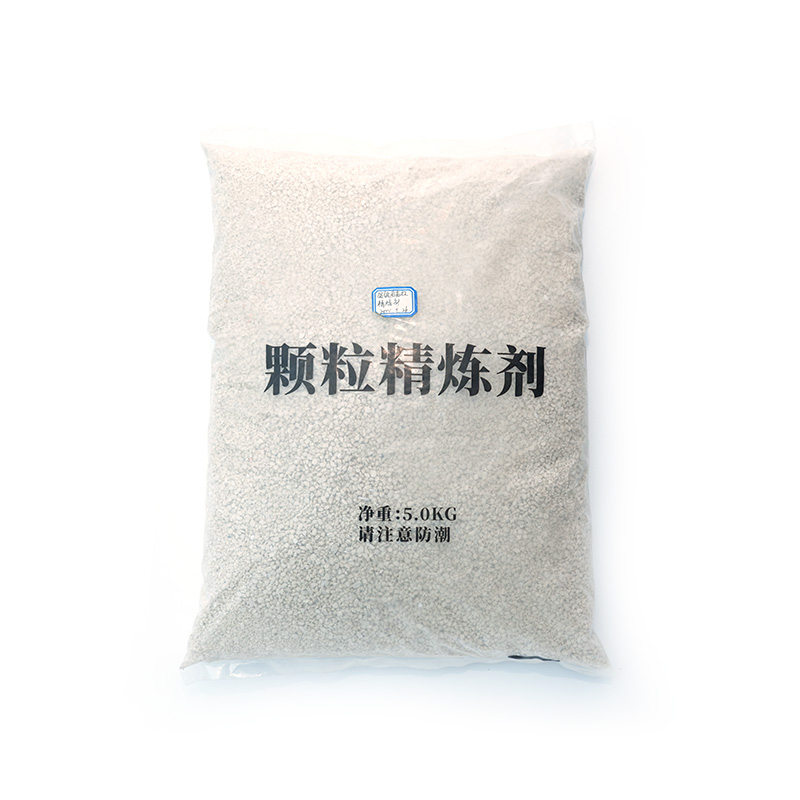 Granule Refining Flux for Aluminum Alloy SmeltingGranular refining flux for molten aluminum, added at 0.08%-0.15% to remove oxide inclusions and slag, with smokeless performance and 5 kg packaging.View Product →
Dosage discipline matters as much as selection. Under-dosing leaves gas in the melt; overdosing attacks the refractory lining, generates extra fume, and can leave a residue that shows up later as inclusion defects. Follow the supplier's range and adjust against your own gas test results, not against a colleague's habit.
Matching Additives to Melt Temperature and Alloy
The largest controllable cause of low recovery is addition temperature. Every element has a window: below it the particles never fully dissolve, above it oxidation and settling losses climb faster than recovery. The table below covers the windows used in most aluminium foundries.
| Additive | Addition window | Practical note |
|---|---|---|
| Al-Ti-B grain refiner | 700-740 °C | Add late in transfer; above 750 °C refinement fades quickly |
| Mn and Fe tablets | 720-760 °C | Recovery rises sharply with superheat; below 710 °C expect sludge |
| Cr and Zr tablets | 740-780 °C | Slowest to dissolve; stir and hold before sampling |
| Al-Sr modifier | 690-730 °C | Overheating burns off strontium; add as late as possible |
| Refining flux | 700-750 °C | Purge and skim; do not alloy until the skim comes clean |
The curve below shows the shape of the problem for manganese tablets. Recovery climbs steeply as the bath approaches 730 °C, flattens out, then falls away again once oxidation and settling losses overtake the gain from faster dissolution.
Indicative manganese recovery from tablets against melt temperature.
Cost follows the same logic. Alloying elements take the largest share of the additive budget, refinement takes the smallest, yet it is refinement that protects the alloying spend by keeping the melt clean enough for reliable dissolution.
- Alloying elements 52%
- Grain refinement 28%
- Melt refining 20%
Indicative split of additive spending in a secondary aluminium foundry; the mix shifts with alloy portfolio and scrap quality.
A Purchase Checklist Before You Commit
Additive specifications look similar across suppliers on paper, so the difference usually shows up in batch consistency and in how quickly the supplier answers a technical question. Six checks are worth running before a first order.
- Chemistry per batch, not per year. Ask for a certificate of analysis tied to the delivery, and check that the element range matches the grade you specified.
- Tablet weight and size consistency. Weigh a random sample of twenty discs; a wide spread means dosing accuracy disappears on the shop floor.
- Moisture and packaging. Sealed, moisture-barrier packaging with a desiccant is normal for tablets and fluxes; torn liners are a rejection reason.
- A dissolution trial on your own melt. One tonne of production metal tells you more about recovery than any laboratory report.
- Traceability. Batch numbers that link back to production records make it possible to isolate a problem instead of scrapping a whole delivery.
- Quality system. Certification such as ISO 9001 or GJB9001C indicates an audited process, which matters most on repeat orders where consistency is the whole point.
The manufacturing background behind those checks, including production capacity and the quality certifications the plant holds, is summarized on our production and quality profile page.
Frequently Asked Questions
Do I still need a master alloy if I already use tablets?
Usually yes, but not for the same elements. Tablets handle Mn, Fe, Cu, Cr and Ti additions efficiently. Grain refinement with titanium and boron, or modification with strontium, is still best delivered as a master alloy because the active particles need the pre-alloyed form to survive in the melt.
Why does recovery fall when the melt gets too hot?
Above the useful window, the extra energy goes into oxidation at the bath surface and faster settling of dense particles, and both losses outrun the gain from quicker dissolution. Holding time compounds the effect: a long stir above 760 °C can cost several percent of the added element.
Can flux and alloying tablets go in at the same time?
No. Refine and skim first, then add the alloying elements, then sample. Adding tablets into a dirty melt lets the flux carrier compete with oxides and inclusions, and the recovery you measure afterwards will be misleading.
How long can additives be stored?
Master alloys keep for months in dry indoor storage. Tablets and fluxes are more sensitive and typically carry a shelf-life date, because moisture pickup degrades both dosing accuracy and the hydrogen level in the final casting.
Additive selection is a small part of a melting shop's cost sheet and a surprisingly large part of its scrap rate. Get the form right for the element, put it in at the right temperature, clean the melt before you alloy it, and verify each delivery against a dissolution test on your own metal. Those four habits fix most recovery problems that are currently being paid for with extra kilograms of tablets.
Interested in cooperation or have questions?

- Quick Link
- HOME
- PRODUCTS
- NEWS
- SOLUTION
- CONTACT US
- Contact information
-
-
wmfan0222@163.com

-
+86-13167461999

+86-18252891222(WhatsApp) -
+86-0513-88275999

-
No.19 HeshunHaian Economic Development Zone, Nantong, Jiangsu, China

-

