

 English
  中文简体
中文简体 
ANGSHEN
ANGSHEN
ANGSHEN
ANGSHEN
ANGSHEN
ANGSHEN
ANGSHEN
ANGSHEN
ANGSHEN
ANGSHEN
ANGSHEN
ANGSHEN
ANGSHEN
ANGSHEN
ANGSHEN
ANGSHEN

Aluminum Alloying Tablets: Selection, Recovery Rates and Melt Practices
Content
- 1 What an Alloying Tablet Actually Does in the Melt
- 2 Matching Tablet Grades to Target Alloys
- 3 Recovery: Why 93% Is Normal and 100% Is a Quotation Trick
- 4 Element-by-Element Notes from the Furnace Floor
- 5 Storage and Handling Habits That Protect Recovery
- 6 What to Verify Before You Place the Order
- 7 Frequently Asked Questions
A casthouse running 6061 billet at 730°C adds manganese tablets through a bell plunger, waits two minutes, and samples the bath. The lab returns 0.58% Mn against a 0.60-0.70% window. Nothing was wrong with the metal. The tablets simply went into a colder, more oxidised melt than the specification assumed, and part of the addition ended up in the skimmer.
Here is the conclusion first: aluminum alloying tablets earn their place whenever the element you need melts far above your holding temperature and a master alloy would demand a hotter furnace or a longer stir than the schedule allows. Get the grade, the particle size and the plunging routine right, and recovery sits comfortably in the low-to-mid 90s. Get them wrong, and you pay for metal that never reaches the alloy.
What an Alloying Tablet Actually Does in the Melt
A tablet is a compacted blend of fine metal powder held together in a flux matrix. Compaction creates internal porosity, and that porosity is the entire point: liquid aluminium penetrates the tablet, breaks the structure apart from the inside, and continuously exposes fresh metal surface to the bath instead of letting a single oxide skin seal the particle shut.
The flux portion is not filler. It melts at bath temperature, wets the metal particles, and suppresses oxide formation at the particle boundary. That is the difference between a tablet that dissolves in ninety seconds and an equal weight of machining chips that floats, smokes, and oxidises on the surface.
When the tablet route beats a master alloy
- Holding temperature at or below roughly 760°C, where a higher-melting master alloy dissolves slowly and unevenly.
- Small corrective additions on a short cycle, such as trimming a bath that is 0.05% low on manganese or chromium rather than building an alloy from scratch.
- Bench furnaces, crucible units and small induction installations that lack the melt agitation a master alloy assumes.
- Elements that are easily lost to oxidation when introduced as pure metal, with titanium and chromium the usual offenders.
Master alloys still win on large bulk additions, on alloy families you run every single day, and wherever scrap chemistry already carries most of the target element. The two product families are not competitors so much as different points on the same addition curve.
Matching Tablet Grades to Target Alloys
Tablet selection follows the alloy, not the other way round. The seven elements normally supplied in tablet form map onto fairly predictable alloy families, and knowing which family you are running removes most of the guesswork before you ever open a quotation.
| Element | Typical target alloys | Why the tablet route fits | Common pitfall |
|---|---|---|---|
| Copper | 2xxx series, 201, 206, A319 | High recovery at normal holding temperatures, easy to dose in small steps | Treating copper as fast-dissolving; it needs stirring, not patience alone |
| Manganese | 3003, 3103, 6061 | Bypasses the slow dissolution of high-melting manganese at 730°C | Adding below 700°C, where recovery drops sharply |
| Iron | 8006, 8021, foil stock | Introduces iron without the sludge problems of coarse scrap routes | Over-addition, which pushes iron past the sludge threshold |
| Silicon | 4xxx, A356, A360 | Fusible silicon tablets avoid the dust and segregation of powder blends | Assuming silicon behaves like copper; its density is lower |
| Titanium | Grain-refined casting alloys | Limits oxidation loss that pure titanium wire suffers | Confusing it with a nucleant; tablets feed composition, not grain size |
| Chromium | 5xxx corrosion-resistant alloys | Delivers chromium at temperatures where the master alloy stalls | Underestimating the flux demand at low bath temperature |
| Zirconium | Specialty 7xxx and conductor alloys | Precise dosing for elements required in very small percentages | Poor distribution; zirconium needs thorough agitation |
Recovery: Why 93% Is Normal and 100% Is a Quotation Trick
Run the arithmetic on a one-tonne bath and the picture sharpens quickly. Raising manganese by 0.10% calls for roughly 1.05 kg of manganese by pure chemistry. At 93% recovery you actually charge about 1.13 kg. If a supplier quotes on a 100% assumption while your furnace delivers 90%, the shortfall shows up as a repeated corrective addition on every heat, and that costs more than the difference in unit price ever will.
Where does the missing percentage point go? Three places, mostly. First, particles whose oxide shell survives the flux and never contacts fresh aluminium. Second, tablets that sit on the surface for several seconds before plunging, losing the finest fraction to the atmosphere. Third, dross and wall build-up, where metal is physically attached to something you skim off. Temperature, dwell time and agitation control all three, which is why the same tablet can deliver 88% on one furnace and 95% on the next.
Element-by-Element Notes from the Furnace Floor
Copper tablets
Copper is one of the friendlier additions, but its density means it settles if the bath is quiet. Charge tablets through a bell plunger, hold them under for sixty to ninety seconds, and stir. In 2xxx alloys and Al-Cu casting grades where the target sits 0.1-0.3% away from the current analysis, tablets give a predictable step that is easy to verify at the spectrometer.
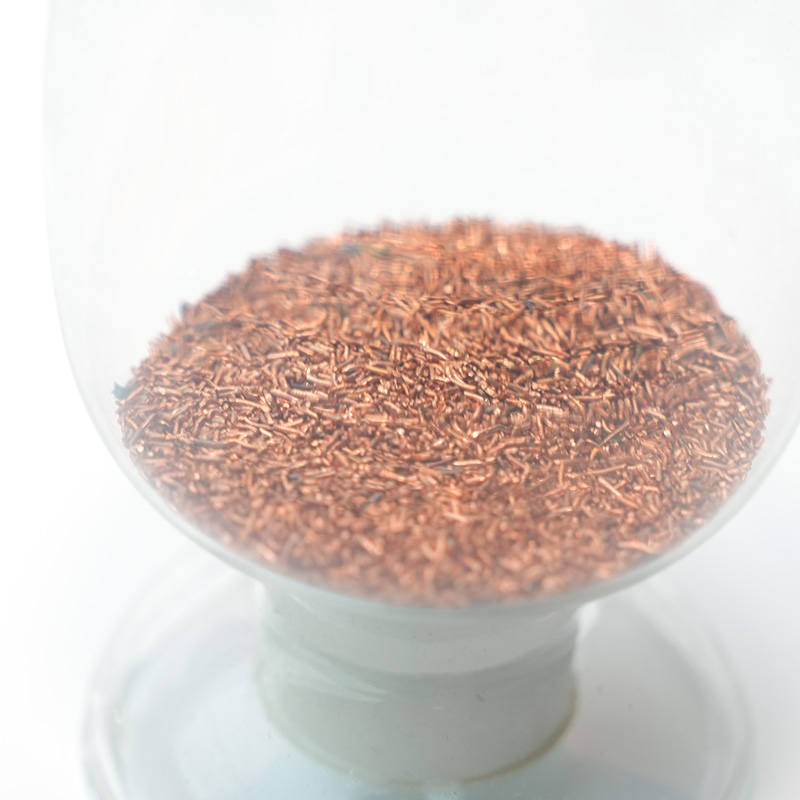 Copper Tablets for Aluminum AlloyingCopper Tablets for Aluminum Alloying are high-efficiency alloying additives specifically designed for aluminum alloy smelting processes. Represented by Cu75 and Cu80 m...View Product →
Manganese tablets
Manganese is the classic case for tablets. Its melting point is far above any practical holding temperature, so a manganese-containing master alloy dissolves slowly unless the furnace is unusually hot and well stirred. For 6061, 3003 and 3103 heats that come off the spectrometer slightly low, tablets close the gap within the same tap-to-tap cycle. Keep the bath above 720°C and hold the tablets under the surface rather than dropping them into the vortex.
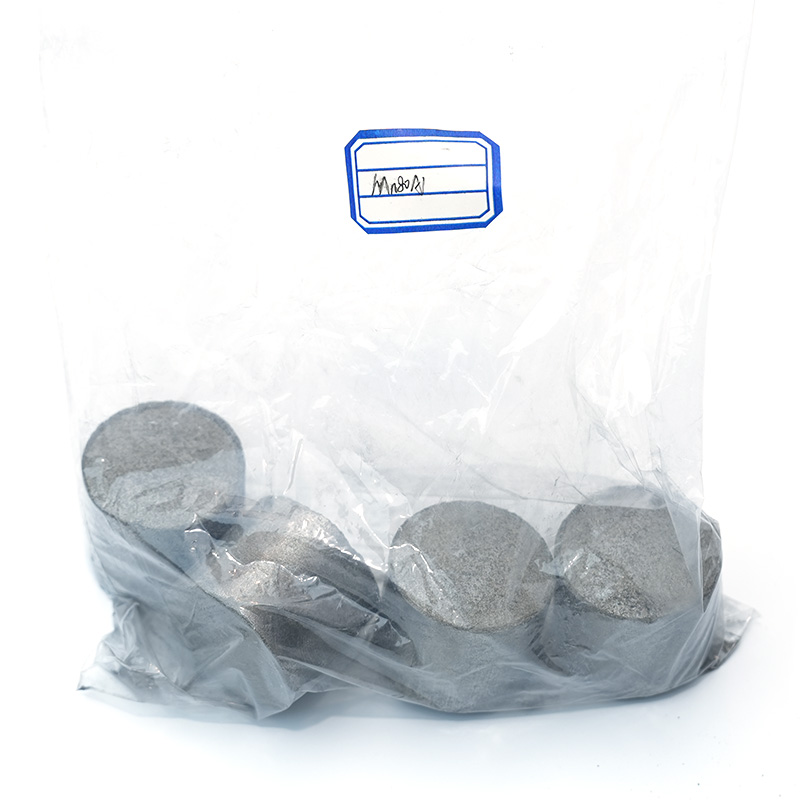 Manganese Tablets for Aluminum AlloyingManganese Tablets for Aluminum Alloying are compacted metallic additives, primarily composed of manganese (Mn), used to introduce and control the manganese content in ...View Product →
Titanium tablets
Titanium is the element that punishes careless handling hardest. Introduced as pure metal, it oxidises and plates onto furnace walls. A tablet shields the particles long enough to enter the bath. Use titanium tablets to build composition, and remember that composition and grain refinement are two separate jobs handled by two different products.
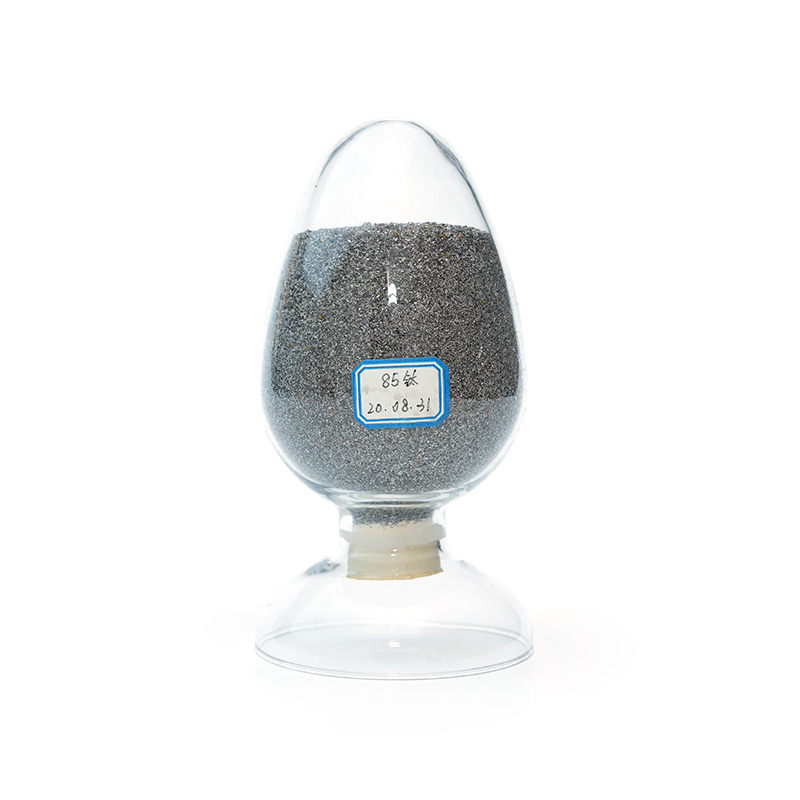 Titanium Tablets for Aluminum AlloyingTitanium Tablets for Aluminum Alloying are block-shaped additives specifically designed for precise control of titanium content during aluminum alloy smelting. Availab...View Product →
Storage and Handling Habits That Protect Recovery
Most recovery complaints traced back to a supplier turn out, on inspection, to be handling issues at the furnace. These are the habits that keep measured recovery close to the laboratory figure.
- Keep packaging sealed until the moment of use. A flux matrix that has absorbed moisture will spit and spatter on contact with liquid aluminium.
- Store in a covered, dry area. Open trays left on a casthouse floor overnight pick up humidity and lose flowability.
- Check particle size distribution per batch before charging. Excess fines indicate either rough transport or weak compaction, and fines oxidise before they dissolve.
- Never broadcast tablets onto the dross layer. They must enter the metal, not the skim.
- Hold under the plunger for the supplier-recommended dwell time, typically sixty to one hundred twenty seconds, then stir for even distribution.
- Record recovery per heat. A rolling three-month average tells you more about a product than any single certificate.
What to Verify Before You Place the Order
Price per kilogram is the easiest number to compare and the least useful on its own. Work through a short checklist instead, and ask for documented answers rather than verbal assurances.
- Active element content and its tolerance band, stated per batch rather than as a typical value.
- Compaction density and a fines percentage limit, since both drive in-bath behaviour.
- Dissolution test data at a temperature close to your own holding temperature, not a laboratory ideal.
- Batch traceability and a certificate of analysis that travels with the delivery.
- Technical support from people who have stood next to a furnace, not just a sales desk.
A supplier with genuine production depth can usually answer questions about plunging technique, dwell time and flux chemistry without escalation. It also helps to know where the material is actually made, how many lines run it, and what quality system governs it, because those details explain why one batch behaves like the last one. The manufacturing base and quality system behind a supplier is often the quiet reason a year of recovery data stays flat.
For the full range of elements available in compacted form, including the exact grades referenced above, the aluminum alloying additives tablets range is organised by element so that specification and ordering stay straightforward.
Frequently Asked Questions
How are tablets different from master alloys?
A master alloy is a pre-melted aluminium-based material, such as AlMn10, in which the target element is already dissolved. A tablet is compacted powder plus a flux carrier. Master alloys suit large bulk additions and familiar alloy families; tablets suit precise small corrections, lower holding temperatures and furnaces with limited agitation. Many casthouses use both within the same heat.
How do I calculate the charge weight for a tablet addition?
Work out the pure element required from the bath weight and the composition gap, then divide by the expected recovery. A one-tonne bath that needs 0.05% copper requires 0.5 kg of copper in theory, so about 0.52 kg at 96% recovery. Always confirm with a spectrometer reading after stirring rather than assuming the calculation landed perfectly.
Do tablets need preheating before charging?
Generally no. Dryness matters far more than temperature. If the packaging has been open in a humid environment, a gentle dry at around 200°C removes surface moisture and prevents spitting. Charging cold, dry tablets into a properly stirred bath is normal practice and does not measurably reduce recovery.
PREV:Aluminum Casting Additives: Types, Selection, and Practical Melt GuideNEXT:Aluminum Alloying Additives: How to Choose Between Tablets and Master Alloys
Interested in cooperation or have questions?

- Quick Link
- HOME
- PRODUCTS
- NEWS
- SOLUTION
- CONTACT US
- Contact information
-
-
wmfan0222@163.com

-
+86-13167461999

+86-18252891222(WhatsApp) -
+86-0513-88275999

-
No.19 HeshunHaian Economic Development Zone, Nantong, Jiangsu, China

-

