

 English
 中文简体

ANGSHEN
ANGSHEN
ANGSHEN
ANGSHEN
ANGSHEN
ANGSHEN
ANGSHEN
ANGSHEN
ANGSHEN
ANGSHEN
ANGSHEN
ANGSHEN
ANGSHEN
ANGSHEN
ANGSHEN
ANGSHEN

Alloy Tablet vs Master Alloy Cost Comparison: Which Adds Cheaper Titanium?
Content
- 1 Tablets vs master alloys: the cost lines that actually matter
- 2 Where the price gap comes from: you are buying carrier metal
- 3 Costs that sit on the tablet side of the ledger
- 4 Costs that sit on the master alloy side
- 5 A worked example on a 10-tonne heat
- 6 Element by element, the cheaper route changes
- 7 A seven-point buying checklist
- 8 Frequently asked questions
Two quotes landed on the same desk: 5% TiB master alloy at $3.80 per kilogram, and compressed titanium tablets at $8.20 per kilogram. On a 12-tonne AlSi7Mg heat calling for an extra 0.12% titanium, the tablets worked out at roughly $150 of material against about $810 for the master alloy route. Then the furnace crew added two details the purchasing sheet had ignored: the tablets needed 20 °C more superheat, and settling time stretched from 8 minutes to 18.
That is the shape of almost every alloy tablet versus master alloy cost comparison. Tablets usually win on cost per kilogram of delivered element and on freight, because you are not paying to ship 95% aluminum back into a plant that already has a furnace full of it. Master alloys still earn their premium through recovery, dissolution speed and repeatability in cold or fast-cycle melts. The number that decides the purchase is neither price list: it is cost per point of element that survives to the analysis sample.
Tablets vs master alloys: the cost lines that actually matter
Put the two product forms side by side on the variables that move money, and the pattern stops being surprising. The ranges below are typical for aluminum melting; your own quotations and certificates should replace them before any budget is fixed.
| Cost line | Master alloy (5% Ti) | Alloying tablet (~75% Ti) | Effect on your cost |
|---|---|---|---|
| Element carried per kg | 50 g Ti | About 750 g Ti | Tablets need 10–15× less material per point |
| Price per kg of product | Low | High | Misleading on its own |
| Price per kg of contained element | Often 3–6× higher | Baseline | The figure worth negotiating on |
| Freight per point of element | High, carrier metal included | Low | Favours tablets over long distances |
| Typical recovery | 95–98% | 85–92% | Each 1% recovery loss adds about 1% to cost |
| Slag and gas pick-up | Low | Higher if damp | Drying and packaging are real cost lines |
| Small-lot flexibility | Poor, campaign melting with MOQs | Good | Tablets suit short runs and trim additions |
Where the price gap comes from: you are buying carrier metal
A 5% master alloy is 95% aluminum by weight. Buy 200 kg to put 10 kg of titanium into a melt and you have purchased 190 kg of a metal the furnace already contains, then paid to melt it again, ship it, store it and skim what oxidises along the way. A compressed tablet at 70–80% active element inverts the ratio: most of what you buy is the element you actually want.
The trade-off is metallurgical rather than commercial. Master alloys are pre-alloyed, so the element arrives in a form that dissolves at normal bath temperature with predictable recovery. Tablets rely on an exothermic reaction and mechanical dispersal through the melt, which asks more of the operator and of the temperature window.
The formula worth running before any negotiation
Product needed (kg) = (melt weight × target addition %) ÷ (element fraction in the product × recovery). Multiply by the quoted price per kilogram and you have the material cost of the addition. Divide that by the number of points added and you get cost per point — the only figure that compares cleanly across product forms, element contents and suppliers.
Costs that sit on the tablet side of the ledger
Tablets look cheap per kilogram of element and then quietly accumulate costs elsewhere. These are the ones worth writing into the comparison:
- Recovery discount. A 90% recovery instead of 97% raises the effective cost per delivered point by roughly 8%. Ask for a guaranteed range at your bath temperature, not a laboratory best case.
- Moisture and gas pick-up. Salt-based tablets are hygroscopic. Sealed foil packaging, desiccant and a drying step cost money, and skipping them reappears later as hydrogen porosity.
- Dust and fines. Broken tablets and fine fractions are lost product, and extraction plus housekeeping is a genuine operating cost.
- Packaging and shelf life. Single-use sealed bags, batch sizes and a finite shelf life create inventory discipline the master alloy route never demands.
- Technique. A tablet plunged too late or too shallowly gives variable recovery, and that variability is paid for by the foundry, not the supplier.
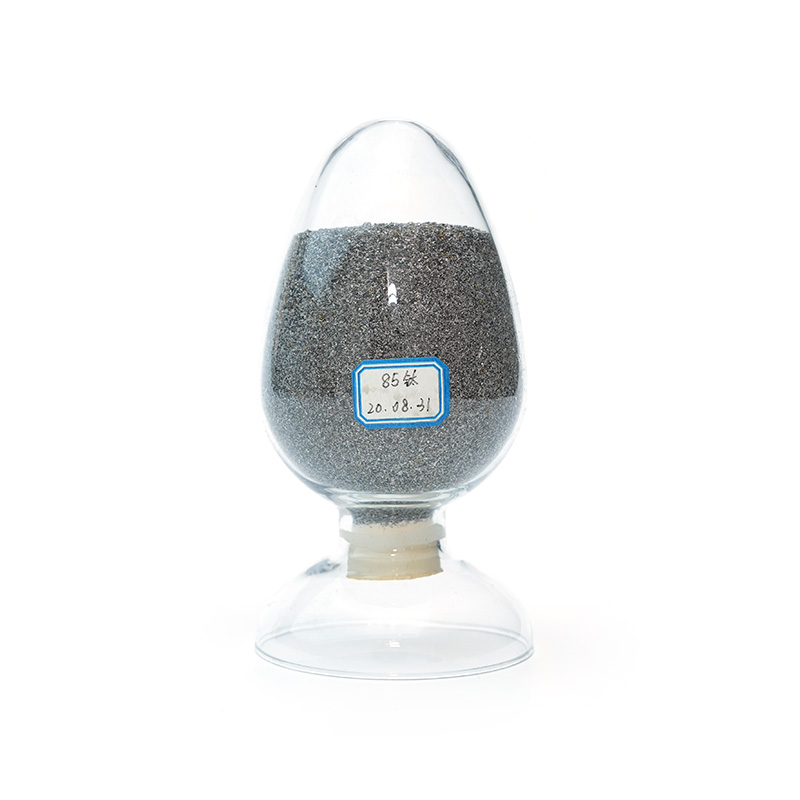 Titanium Tablets for Aluminum AlloyingTi75 and Ti80 500 g tablets for precise titanium adjustment, with ≥90% recovery and rapid dissolution in aluminum melts.View Product →
Costs that sit on the master alloy side
- Freight on carrier metal. Ten to twenty times the weight per unit of element, often in a higher freight class.
- Working capital and shelf space. A full master alloy range means pallets, racks and cash tied up in stock, where tablets store in cartons.
- Minimum order quantities. Master alloys are melted in campaigns, so small or infrequent heats often mean buying more than the schedule needs.
- Superheat. TiB additions typically want 730–750 °C. Every extra 10 °C costs energy and increases melt loss and oxidation.
- Stirring and turnaround. Longer mixing and settling reduce furnace availability, a capacity cost rather than a materials cost, but it still shows in the month's numbers.
Both routes can be sourced from a supplier that melts and compacts in-house, which matters when you want the same recovery assumptions applied to both quotations. Our 48,000 m² production base runs dedicated master alloy, tablet and flux lines for exactly this kind of side-by-side evaluation.
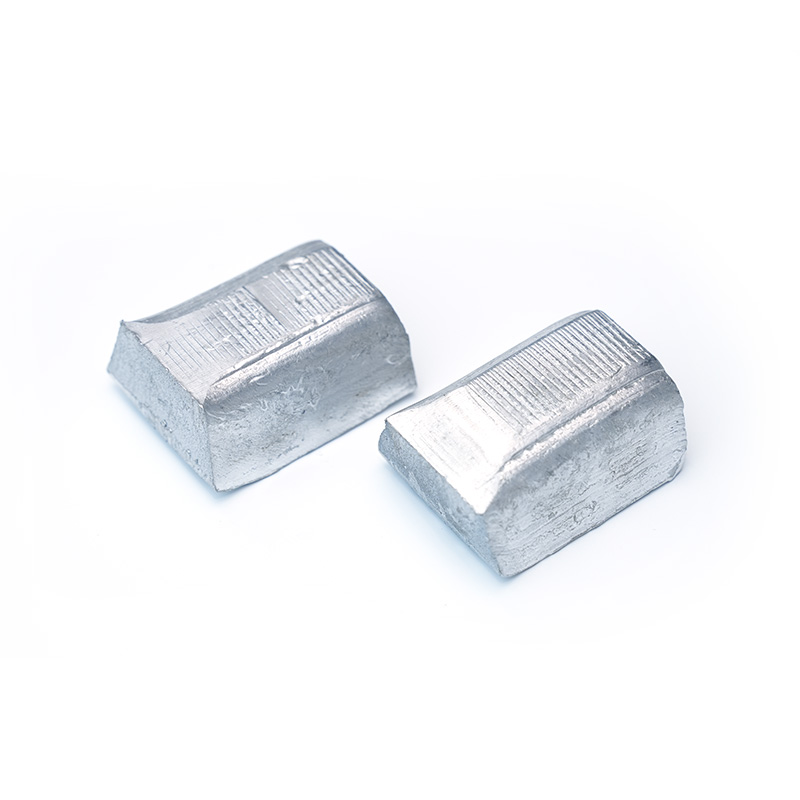 Aluminum Titanium Boron Master AlloyTi5B1, Ti5B0.2 and Ti3B1 grain-refining master alloys in stick, coil, waffle ingot and cast cut bar forms.View Product →
A worked example on a 10-tonne heat
Target addition: +0.10% Ti in 10 tonnes of melt, which is 10 kg of titanium entering the bath. Both offers are converted with the formula above.
| Line | Master alloy route | Tablet route |
|---|---|---|
| Product and element content | 5% Ti master alloy | 75% Ti tablet |
| Recovery assumed | 95% | 90% |
| Product required | 210.5 kg | 14.8 kg |
| Quoted price per kg | $3.80 | $8.20 |
| Material cost | $800 | $121 |
| Inbound freight | $13 | $2 |
| Drying and extra furnace time | $0 | $40 |
| Total for the heat | $813 | $163 |
| Cost per point of titanium | $81 | $16 |
The tablet route would have to burn roughly $650 of extra energy and labour on that single heat before the master alloy became competitive. That is the honest test: not which product has the lower list price, but how much furnace time and unrecovered element it takes to close the gap. In low-superheat furnaces with short cycles, that gap does close.
Element by element, the cheaper route changes
Recovery and melting point differ by element, so no single verdict covers a whole catalogue.
Titanium and boron
Tablets are attractive at low addition levels where a 5% master alloy would double the charge weight; for grain refinement in continuous casting, TiB master alloy remains the more repeatable option.
Manganese, iron and chromium
High-content tablets usually undercut master alloys by a wide margin and these elements dissolve readily in aluminum, which is why iron tablets are a common route to Al-Fe alloys and to iron correction in secondary metal.
Silicon
Fusible silicon tablets compete directly with Al-Si 50% master alloy; the spread is large, and the decision comes down to furnace temperature and how much aluminum dilution the specification tolerates.
Strontium and zirconium
Low addition levels and fast losses favour master alloys such as Al-Sr 10%, while high-melting elements like zirconium are handled by pre-alloyed material because the pure element barely dissolves at bath temperature.
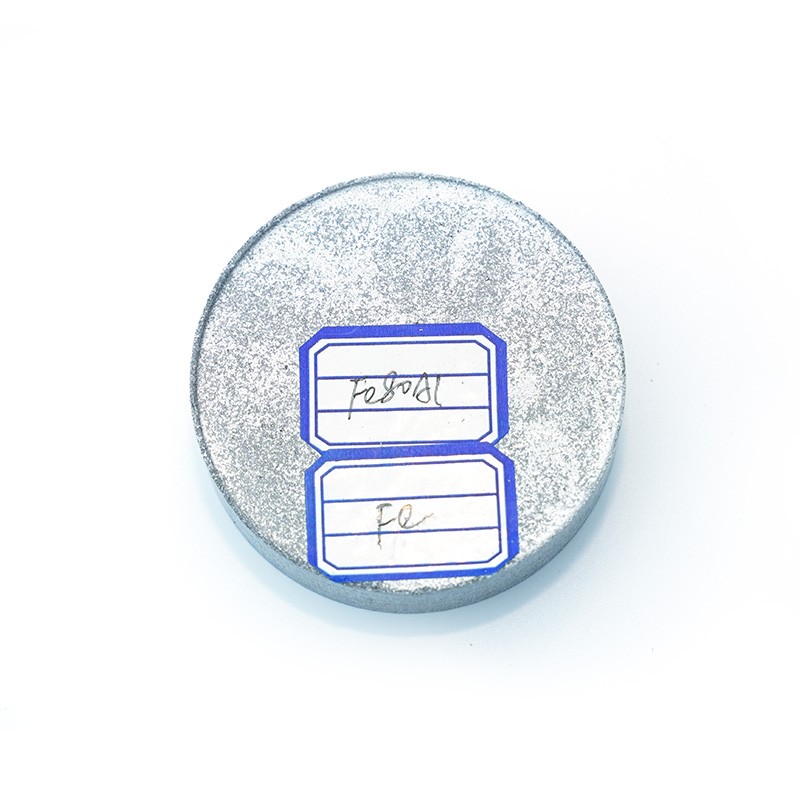 Iron Tablets for Aluminum AlloyingFe75 and Fe80 500 g tablets for iron adjustment, offering ≥90% recovery and rapid dissolution at 720–760°C.View Product →
A seven-point buying checklist
- Ask for price per kilogram of contained element, never per kilogram of product.
- Require a guaranteed recovery range at your melt temperature, in writing, with the test method.
- Request the certificate of analysis for the lot, including gas content for tablets.
- Convert both offers to cost per point per tonne of melt, including power, labour and packaging.
- Price extra hold time at your furnace's real hourly cost, not a nominal figure.
- Check moisture protection, shelf life and packaging disposal before approving a trial.
- Verify the supplier's quality system and traceability; military-standard certification such as GJB9001C is a useful baseline for critical alloys.
Frequently asked questions
Are alloying tablets always cheaper than master alloys?
No. They are cheaper per kilogram of contained element in most cases and far cheaper to ship, but a tablet route that needs extra superheat, long settling or careful drying can lose that advantage on a small heat.
How do I convert a tablet price into cost per point?
Divide the price per kilogram by the element fraction, then by recovery. A 75% titanium tablet at $8.20 per kg with 90% recovery delivers titanium at about $12.15 per kg of recovered element; a 5% master alloy at $3.80 per kg with 95% recovery delivers it at about $80.
Can both forms be used in the same heat?
Yes, and it is common practice: master alloy for the base addition, tablets for trim. Keep the total addition inside the solubility limit and allow settling time after the last tablet.
Does the cheapest quotation give the lowest cost?
Rarely. The lowest-cost addition is the one with the smallest product of price, unrecovered element and furnace time, which is why two suppliers quoting the same alloy can differ by 30% in real cost while their price lists look identical.
The comparison comes down to four numbers you already have access to: element content, recovery at your bath temperature, price per kilogram, and what ten extra minutes of furnace time costs. Everything else is presentation. Send your target composition and current quotations, and we will run the conversion on your melt, in both product forms, on the same assumptions.
PREV:No previous articleNEXT:Custom Flux for Aluminum Factory: Matching Chemistry to Your Melt and Furnace
Interested in cooperation or have questions?

- Quick Link
- HOME
- PRODUCTS
- NEWS
- SOLUTION
- CONTACT US
- Contact information
-
-
wmfan0222@163.com

-
+86-13167461999

+86-18252891222(WhatsApp) -
+86-0513-88275999

-
No.19 HeshunHaian Economic Development Zone, Nantong, Jiangsu, China

-

