

 English
 中文简体

ANGSHEN
ANGSHEN
ANGSHEN
ANGSHEN
ANGSHEN
ANGSHEN
ANGSHEN
ANGSHEN
ANGSHEN
ANGSHEN
ANGSHEN
ANGSHEN
ANGSHEN
ANGSHEN
ANGSHEN
ANGSHEN

China Aluminum Dross Separating Drossing Flux Supplier: A Buyer's Checklist
Content
- 1 What a Dross Separating Flux Actually Does in the Melt
- 2 Why Chinese Supply Is Worth Evaluating, and What to Verify
- 3 Specification Points to Write Into Your Purchase Order
- 4 Matching Flux Chemistry to Your Furnace and Alloy
- 5 Procurement Risks That Surface After the Container Lands
- 6 Questions Buyers Ask Before the First Order
A die caster in Ningbo lost about two percentage points of metal yield in a single quarter without changing alloy, furnace or operators. The cause was not the burner. It was a switch to a cheaper drossing flux whose chloride balance drifted between batches, so the dross came off wet, sticky and full of entrapped aluminum that went to the landfill instead of back into the melt.
The short answer: when you source aluminum dross separating flux from China, three things decide whether you save money or lose it. Flux chemistry matched to your alloy and furnace type. Batch-to-batch consistency backed by a batch-specific certificate of analysis. A plant that can repeat the same formulation on your tenth order, not only your first. Price per tonne is a distant fourth.
The rest of this guide covers what those factors mean in practice, which checkpoints belong in your purchase order, and where buyers most often lose money after the container has landed.
What a Dross Separating Flux Actually Does in the Melt
Molten aluminum grows an oxide skin the instant it meets air. That skin is why dross holds metal: the oxide film wraps around droplets and stops them from draining back into the bath. A drossing flux exists to break that grip.
Interfacial tension and metal drainage
The halide salts in a dross separating flux melt on contact with hot dross and lower the interfacial tension between oxide and metal. Droplets that were pinned inside the dross coalesce, gain weight and fall back into the bath. In practice you see it as dross that leaves the furnace dry and friable instead of wet and pasty, and as metal yield that appears in your monthly reconciliation rather than in a supplier's data sheet.
Exothermic control
Aluminum and certain oxides react exothermically when conditions allow. Left unchecked, that reaction pushes local temperature past the point where more metal oxidizes, which is why some dross piles keep cooking after they are skimmed. Flux chemistry that manages the reaction keeps the pile below that threshold so the loss does not compound while the dross sits in the pit.
Sodium, fluoride and what the flux leaves behind
Sodium-bearing salts are cheap and effective, but sodium is unwelcome in several alloy families, and fluoride content drives fume handling and refractory wear. If you run magnesium-bearing or sodium-sensitive alloys, specify a sodium-free grade and ask for the declared composition rather than the marketing name.
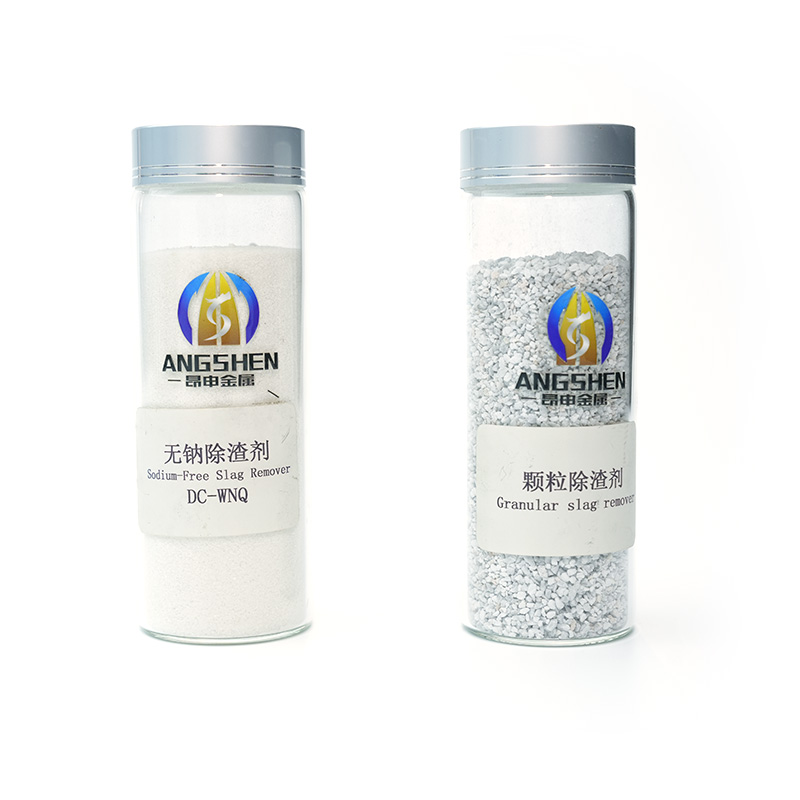 Aluminum Dross Separating Drossing Flux for Die Casting and RecyclingProvides dosage, temperature, and packaging details for evaluating dross separation in die-casting and recycled aluminum operations as buyers compare flux suppliers.View Product →
Why Chinese Supply Is Worth Evaluating, and What to Verify
China produces more than half of the world's primary aluminum, so dross volumes, flux raw materials such as sodium chloride, potassium chloride, cryolite and fluoride salts, and process experience are all concentrated there. That concentration is an advantage, but it also means the quality gap between a real manufacturer and a reseller is wider than in most material categories.
Plant and equipment, not brochures
A supplier that controls melting, blending, screening and packing will show you the actual flux line, the packing station and the warehouse. A 48,000 square meter standardized base with dedicated automated lines for master alloys, metal tablets and fluxes is a different proposition from an office that forwards your order to a third party. You can review the production base and equipment before you shortlist anyone, and use what you see as the benchmark for other quotations.
Documentation and quality systems
Ask for the certificate of analysis per batch, the MSDS, the packing list with net weights, and the quality system certificate. A military-standard certification such as GJB9001C is not a marketing badge; it means the plant is audited against documented process control, which is what protects you when a shipment arrives eight months after the sample was approved.
Batch consistency
The most common complaint about cheap flux is not that it fails immediately, but that batch three behaves differently from batch one. Consistency comes from fixed raw material sources, controlled blending time, screening to a stable particle distribution and moisture-barrier packing. Ask what changes between batches and what does not.
Specification Points to Write Into Your Purchase Order
A product name is not a specification. The checkpoints below determine whether the flux you receive behaves like the flux you tested.
| Checkpoint | What to Require | Why It Matters |
|---|---|---|
| Form and appearance | Free-flowing granules or tablets, no caking, no visible contamination | Caked material cannot be dosed evenly and usually signals moisture ingress in transit. |
| Particle size | Narrow distribution with controlled fines content | Fine dust burns off above the bath before it can act, so you pay for material that never touches the dross. |
| Moisture content | Low, with sealed moisture-barrier packaging | Trapped moisture becomes steam and hydrogen, which shows up later as porosity. |
| Bulk density | Stable from batch to batch | Dosing is set by volume in most plants; drifting density silently changes your addition rate. |
| Declared active composition | Halide and fluoride content stated per batch, sodium level flagged | Determines metal release, fume load and suitability for sodium-sensitive alloys. |
| Addition rate | Typically 1 to 3 kg per tonne of melt, confirmed by trial | Over-fluxing costs money, adds fume and can attack refractory. |
| Packaging and net weight | Stated net weight, sealed inner liner, palletized | Humid warehouses and long sea transit punish anything less. |
Matching Flux Chemistry to Your Furnace and Alloy
The same plant may need three different products. Treating them as one line item is how buyers end up over-dosing one stage and under-treating another.
Reverberatory furnaces and transfer ladles
Here the flux is applied to the bath surface and worked through the dross with a rake. The goal is a dry, granular dross that releases metal before skimming and does not re-wet on the way to the pit.
Hot dross processing and rotary furnaces
When dross is transferred hot, oxidation starts immediately and the clock matters. A pyrothermic flux is designed for that window, added to hot dross so entrapped metal separates before the oxide matrix locks it in.
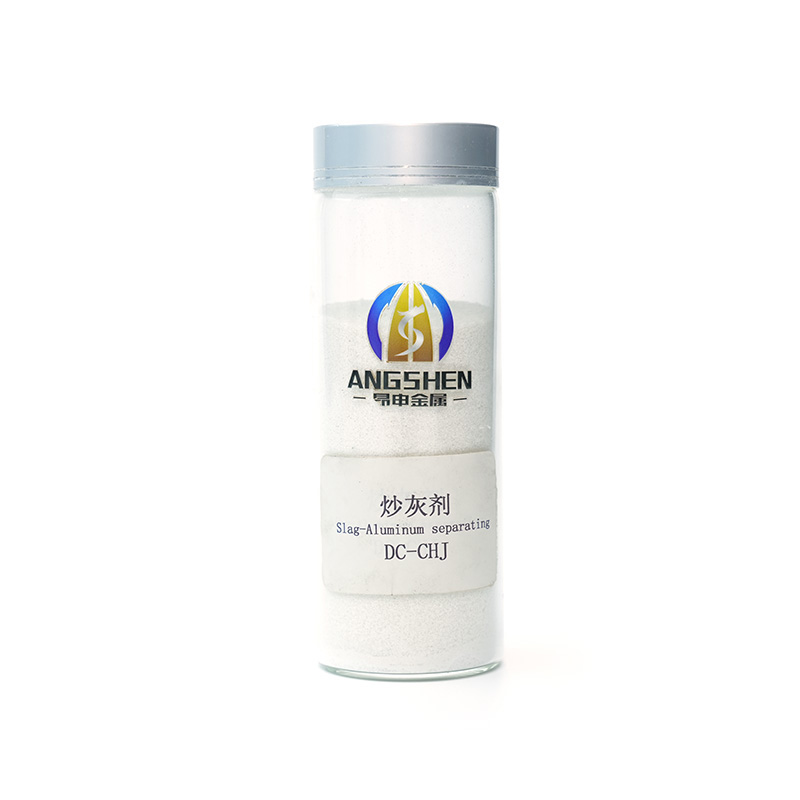 Pyrothermic Slag-Aluminum Separation Flux for Hot Dross TreatmentSuited to hot dross processing before oxidation locks in metal, with addition ratio, 720°C activation, and 25 kg packaging details.View Product →
Refining as a separate step
Drossing and refining are different jobs. Degassing, slag removal and inclusion control belong to refining fluxes and tablets, which are dosed into the melt rather than onto the dross. Mixing the two up leads to extra consumption and inconsistent results.
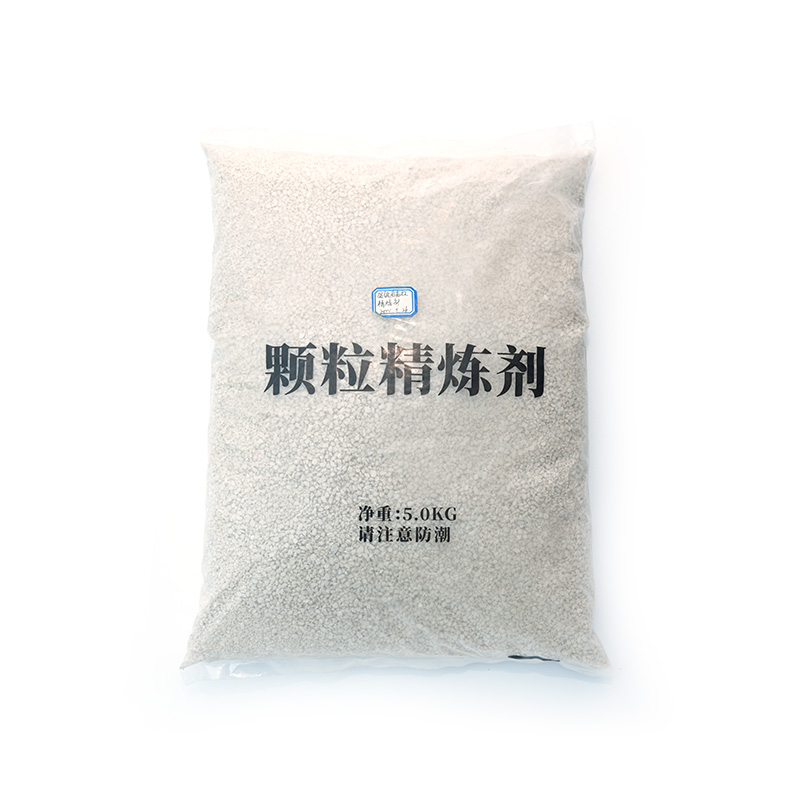 Granular Refining Flux for Aluminum Alloy Melt PurificationFor aluminum melt refining rather than dross treatment, with granular feeding, 0.08–0.15% dosage, and 700–720°C use facts.View Product →
When the melt is copper or zinc
Flux chemistry for copper and zinc melts is not interchangeable with aluminum practice. Copper refining and cover fluxes work at different temperatures against different oxide systems, so a universal product usually underperforms on both.
Procurement Risks That Surface After the Container Lands
Most of the cost of a poor flux decision appears weeks after delivery, not in the quotation. Watch for these patterns:
- Composition drift hidden behind a familiar product name, with no per-batch analysis attached.
- Excess fines that burn off above the bath, quietly raising the effective addition rate.
- Moisture pickup and caking after weeks in a humid port warehouse, which blocks dosing equipment.
- A sample produced in the lab while production runs from a different raw material source.
- Packaging that meets the specification on paper but uses a liner too thin for long sea freight.
- Lead times quoted for a spot order rather than for the repeat volume you actually need.
None of these are exotic. All of them are avoided by testing a trial quantity on your own furnace and requiring batch documentation as a condition of release.
Questions Buyers Ask Before the First Order
Is a drossing flux the same as a refining flux?
No. Drossing flux is applied to the dross surface to release entrapped metal and keep the dross dry. Refining flux is added to the melt to remove inclusions, hydrogen and unwanted elements. Using one for the other job wastes material and usually worsens the result.
How much flux should I budget per tonne of aluminum?
Most casthouses work in the range of 1 to 3 kg per tonne of melt, or 0.1 to 0.3 percent of charge weight. Your actual figure depends on alloy, furnace type and how long dross sits before processing, so confirm it with a trial rather than from a catalogue.
Can one flux cover aluminum, copper and zinc melts?
Rarely with good results. Each metal system has its own oxide behaviour and working temperature. Suppliers that publish separate flux families for aluminum, copper and zinc usually do so because the chemistry genuinely differs.
What documents should arrive with the first shipment?
A batch-specific certificate of analysis, an MSDS, a packing list with net weights and the quality system certificate. If the analysis covers a generic specification rather than the batch number printed on the bags, treat it as a gap.
The takeaway: the cheapest flux per tonne is rarely the cheapest per tonne of recovered metal. Chemistry matched to your alloy and furnace, a plant that can repeat its own formulation, and documentation that follows every batch are what actually control your cost.
Start with a trial quantity, measure metal recovery from dross before and after, and confirm the supplier can hold the same specification on the tenth order rather than only the first. If you want to discuss a specific alloy, furnace type or dross handling routine, get in touch with the team and describe your melt conditions.
PREV:China Aluminum Strontium Master Alloy Supplier: AlSr5, AlSr10, AlSr15, AlSr20 GradesNEXT:China Aluminum Alloying Additives Tablets: Selection Guide for Foundries
Interested in cooperation or have questions?

- Quick Link
- HOME
- PRODUCTS
- NEWS
- SOLUTION
- CONTACT US
- Contact information
-
-
wmfan0222@163.com

-
+86-13167461999

+86-18252891222(WhatsApp) -
+86-0513-88275999

-
No.19 HeshunHaian Economic Development Zone, Nantong, Jiangsu, China

-

