

 English
 中文简体

ANGSHEN
ANGSHEN
ANGSHEN
ANGSHEN
ANGSHEN
ANGSHEN
ANGSHEN
ANGSHEN
ANGSHEN
ANGSHEN
ANGSHEN
ANGSHEN
ANGSHEN
ANGSHEN
ANGSHEN
ANGSHEN

China Aluminum Strontium Master Alloy Supplier: AlSr5, AlSr10, AlSr15, AlSr20 Grades
Content
- 1 What Aluminum Strontium Master Alloy Actually Does
- 2 Aluminum Strontium Master Alloy Grades and Composition
- 3 Why Buyers Source Aluminum Strontium Master Alloy From China
- 4 Aluminum Strontium vs Aluminum Titanium Boron: Two Jobs, One Melt
- 5 Where Aluminum Strontium Master Alloy Ends Up
- 6 Why Melt Condition Decides the Strontium Recovery
- 7 What to Verify Before Placing an Order
- 8 Frequently Asked Questions
A 500 kg heat of A356 wheels fails ultrasonic inspection the week the strontium modifier drifts out of range, not the week the metal price rises. That single fact explains why experienced buyers rarely pick an aluminum strontium master alloy supplier on the lowest quotation. They pick the one that can put an Sr range, a dissolution behaviour, a sodium ceiling, and a batch certificate in writing, then repeat it for twenty tonnes.
What follows is what actually separates a dependable China aluminum strontium master alloy supplier from an intermediary with a warehouse: grade coverage, melt recovery, pairing with grain refiners, quality documentation, and production capacity that holds a specification over time.
What Aluminum Strontium Master Alloy Actually Does
Strontium is a modifier, not a grain refiner. Added to an Al-Si melt, it converts the eutectic silicon from coarse acicular plates into a fine, fibrous network. The payoff appears as higher elongation, better machinability, and fewer castings rejected after heat treatment.
The metal itself melts at 769 °C and oxidizes within seconds in air, so it is never charged as pure strontium. It is pre-alloyed with aluminum into a master alloy, typically AlSr5 through AlSr20, that dissolves in a normal casting furnace. The master alloy form governs three things at once: how quickly the strontium enters solution, how much of it survives the hold, and how evenly it spreads through the crucible.
Why the Tolerance on the Certificate Matters More Than the Headline Grade
A supplier offering AlSr10 at ±1% Sr is selling a different product from one offering ±0.5%. In a one-tonne furnace, a one-point swing on a 10% master alloy moves the strontium addition by roughly 0.1 kg per tonne of metal. That is often the difference between a casting inside its modification window and one that needs rework. Tight specification control costs a little more per kilogram and pays for itself in scrap rate.
Aluminum Strontium Master Alloy Grades and Composition
Foundry demand concentrates on four standard grades. The choice is driven by furnace size, target Sr in the finished casting, and how much addition weight the melt shop is willing to make.
| Grade | Nominal Sr content | Typical form | Best-fit application |
|---|---|---|---|
| AlSr5 | 4.5–5.5% | Ingot, waffle | Small heats and fine trimming of Sr level |
| AlSr10 | 9.0–11.0% | Ingot, waffle | General A356 and A360 wheel and structural casting |
| AlSr15 | 13.5–16.5% | Ingot | Large castings where addition weight must stay low |
| AlSr20 | 18.0–22.0% | Ingot, coil | High-dilution melts with long holding times |
Grades above AlSr20 exist on paper but are rare in practice, because dissolution time grows faster than the addition saving. For most foundries, AlSr10 covers everyday production while AlSr15 or AlSr20 covers larger furnaces.
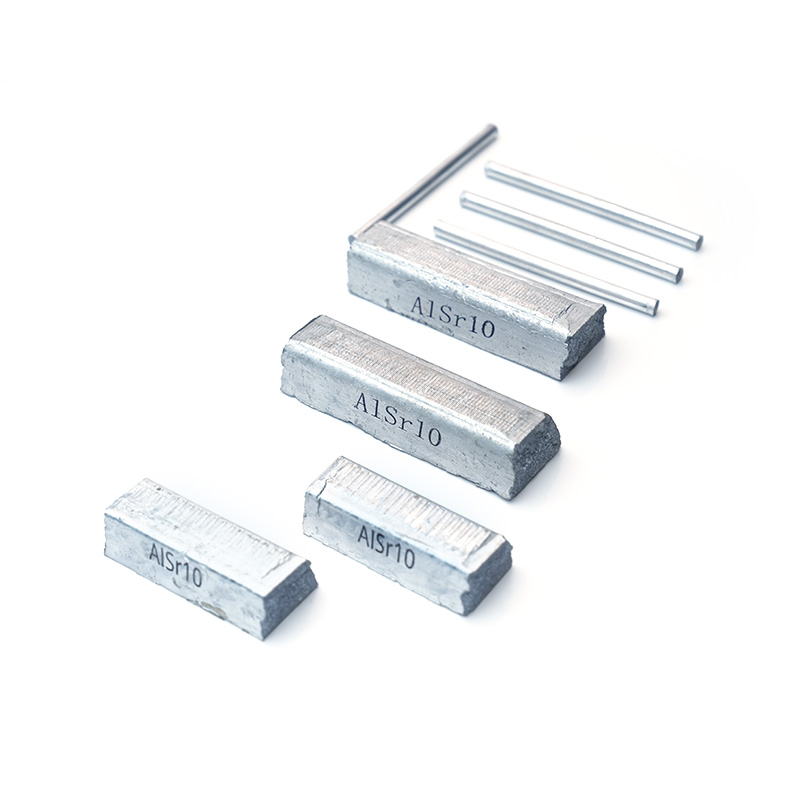 Aluminum Strontium Master Alloy for Al-Si ModificationAvailable in Sr5–Sr20 grades and multiple feed forms, this modifier supports lasting eutectic silicon refinement in Al-Si castings.View Product →
Why Buyers Source Aluminum Strontium Master Alloy From China
China holds the majority of global primary aluminum and downstream master alloy capacity, and the production base sits close to the smelters that supply the base metal. That geography produces two practical advantages for overseas buyers.
- Raw material access. Base aluminum, strontium carbonate, and flux cover stock are all available within a short transport radius, which keeps input cost and lead time stable.
- Established alloying know-how. Chinese master alloy plants have supplied automotive, rail, aerospace, and electrical customers for two decades, and process control has matured alongside them.
Capacity is the second filter. A supplier that can only run small batches will struggle when a customer moves from 200 kg trials to 20-tonne repeat orders. A plant with 48,000 m² of standardised production area, multiple automated master alloy production lines, and dedicated melting, compacting, and packing equipment can hold a specification across that step change.
Aluminum Strontium vs Aluminum Titanium Boron: Two Jobs, One Melt
New buyers sometimes ask which master alloy to buy, AlSr or AlTiB. There is no single answer, because the two do different work and are normally used together.
Aluminum titanium boron is a grain refiner. Its TiAl3 and TiB2 particles act as nucleation sites during solidification and produce a fine, equiaxed grain structure. Aluminum strontium is a modifier. It changes the morphology of the eutectic silicon without refining the primary aluminium grains.
Used alone, a grain refiner leaves the silicon plates coarse; a modifier alone leaves the grain structure dendritic. Used together, they deliver both an equiaxed grain structure and a modified silicon network, which is why high-specification A356 and AlSi7Mg components typically carry both additions. The interaction also matters: strontium can poison certain grain refiners if the Ti and B ratios are wrong, so the two should be specified as a pair rather than bought from unrelated channels.
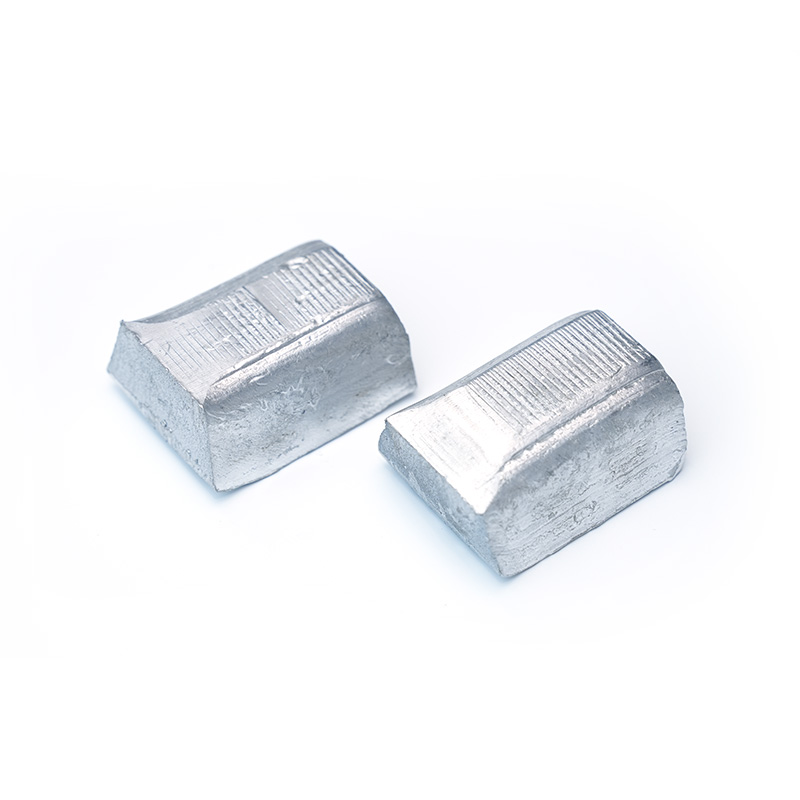 Aluminum Titanium Boron Master Alloy for Grain RefinementTi5B1, Ti5B0.2, and Ti3B1 grades in stick, coil, ingot, or CCB forms support controlled grain refinement in cast and wrought aluminum.View Product →
Where Aluminum Strontium Master Alloy Ends Up
Strontium modification is only useful where cast Al-Si alloys need ductility, and that points to a handful of end markets.
Automotive Lightweighting
Wheels, subframes, shock towers, and battery-housing castings in A356 or AlSi7Mg rely on Sr modification for elongation. A wheel specification typically calls for 7–10% elongation with a modified microstructure, which is not reachable without consistent Sr control.
Aerospace and High-Strength Structures
Investment-cast and sand-cast aluminium components for aerospace use tighter Sr windows and heavier documentation. Casting suppliers in this chain usually require a certificate of analysis per heat plus traceability back to the master alloy batch.
Electrical Conductors
Strontium-modified aluminium also appears in conductor alloys where castability and surface finish matter, although conductivity limits how much modifier can be added. In these grades the Sr level usually stays near the low end of the range.
Recycled Aluminium Correction
Recycled Al-Si melts carry inherited modifier and refiner levels that are hard to predict. Foundries running a high recycled fraction often analyse the melt first and then top up Sr rather than charging a fixed addition. This is where grade flexibility matters: a supplier that ships AlSr5 and AlSr20 from the same plant lets the melt shop trim instead of over-add.
Why Melt Condition Decides the Strontium Recovery
Strontium recovery is often blamed on the master alloy when the real cause is a dirty melt. Oxide inclusions, high hydrogen, and calcium contamination all consume modifier or mask its effect. A foundry that skips refining before the Sr addition can lose a third of the intended recovery and never see it on the master alloy certificate.
The practical sequence is straightforward: refine the melt, remove dross and calcium, then charge the strontium master alloy, and hold for a controlled period before pouring. Melts with a high recycled content benefit most from a granule refining flux ahead of the modifier addition, because cleaner metal dissolves the master alloy faster and holds the modified structure longer during the casting cycle.
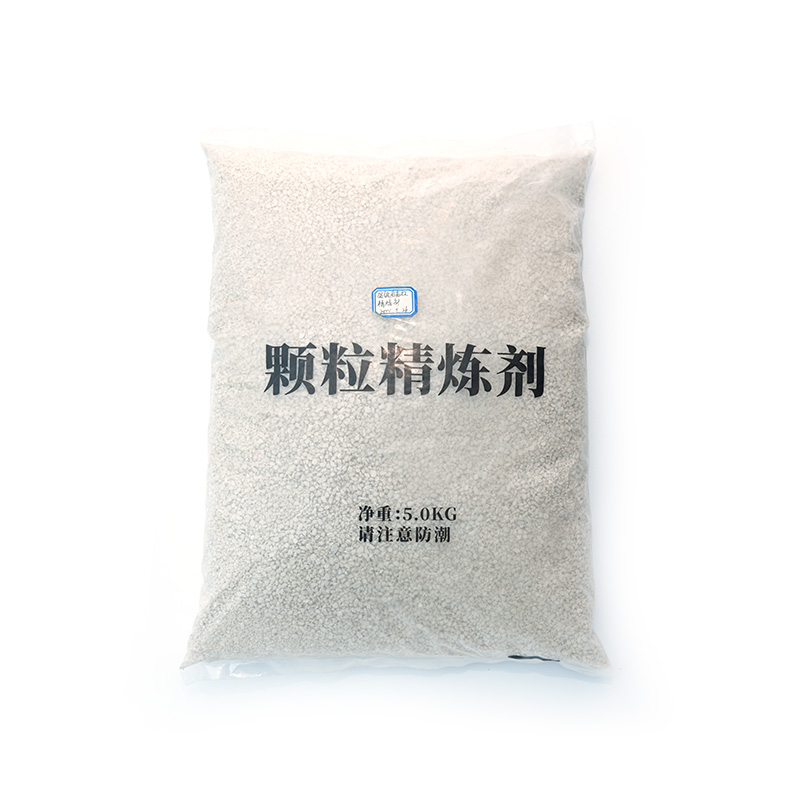 Granule Refining Flux for Aluminum Alloy Melt PurificationSmokeless granular flux removes oxide inclusions and slag at low dosage, aiding cleaner melts before strontium modification in recycled and cast aluminum.View Product →
What to Verify Before Placing an Order
Once a shortlist is in place, the questions that separate suppliers are the same regardless of which country they operate in. Ask for written answers rather than verbal assurances.
- Chemical specification and tolerance. Request the guaranteed range for each element, not only the nominal figure, and ask how the supplier treats elements that are not on the standard certificate.
- Dissolution behaviour. Ask for the recommended charge temperature, ingot or particle size, and expected recovery percentage in your specific furnace type.
- Quality system. A recognised quality management certification is the baseline. Suppliers serving defence-adjacent or aerospace customers should hold a military-standard or aerospace-standard quality system.
- Batch traceability. Every shipment should carry a certificate of analysis tied to a production batch, with retained samples available for later dispute resolution.
- Capacity and lead time. Confirm the actual monthly tonnage for the specific grade rather than total plant capacity, and get the quoted lead time in writing.
- Customisation. Check whether the supplier adjusts Sr content, ingot weight, or packaging to suit your charging system.
Buyers who want a longer walkthrough of the selection process can read a detailed guide on choosing a reliable master alloy manufacturer before issuing an RFQ.
Frequently Asked Questions
Is AlSr10 always better than AlSr5?
No. Higher Sr content means less addition weight, but it also means longer dissolution and a greater risk of localised over-modification. Small furnaces and low-tonnage heats often run more accurately on AlSr5.
How much strontium should remain in the finished casting?
Most Al-Si casting specifications target 0.005–0.030% Sr in the final part, with the exact window set by alloy and heat treatment. Above roughly 0.03% the modification effect stops improving and porosity risk begins to rise.
Does strontium fade during holding?
Yes. Strontium fades over holding time, faster at higher temperature and in melts with poor slag cover. A controlled hold after addition and a clean melt surface are the two most effective ways to slow it down.
Can one supplier cover both master alloy and flux?
Often, yes, and it simplifies purchasing. A supplier that produces master alloys, alloying tablets, and refining fluxes in one facility can coordinate chemistry across the whole melt treatment chain instead of leaving the customer to reconcile three separate certificates.
The right aluminum strontium master alloy supplier is the one whose certificate still matches the ladle analysis on the twentieth shipment. Grade coverage, tight tolerances, documented quality systems, and enough production capacity to scale with the customer matter more than a fraction of a dollar per kilogram. Buyers who evaluate those four things before price usually spend less on scrap than buyers who do not.
PREV:China Flux for Aluminum: A Buyer's Guide to Grades, Specs and Supply ChainsNEXT:China Aluminum Dross Separating Drossing Flux Supplier: A Buyer's Checklist
Interested in cooperation or have questions?

- Quick Link
- HOME
- PRODUCTS
- NEWS
- SOLUTION
- CONTACT US
- Contact information
-
-
wmfan0222@163.com

-
+86-13167461999

+86-18252891222(WhatsApp) -
+86-0513-88275999

-
No.19 HeshunHaian Economic Development Zone, Nantong, Jiangsu, China

-

