

 English
  中文简体
中文简体 
ANGSHEN
ANGSHEN
ANGSHEN
ANGSHEN
ANGSHEN
ANGSHEN
ANGSHEN
ANGSHEN
ANGSHEN
ANGSHEN
ANGSHEN
ANGSHEN
ANGSHEN
ANGSHEN
ANGSHEN
ANGSHEN

Aluminum Alloying Additives: How to Choose Between Tablets and Master Alloys
Content
Suppose your furnace holds 12 tons of 3003 aluminum alloy, and the manganese reading just came back at 0.98% with a target of 1.25%. If you add loose manganese chips, you can expect slow dissolution, batch-to-batch recovery drift, and a real chance of holding the furnace for an extra half hour. If you add a compressed manganese tablet, the same adjustment typically finishes in 10-15 minutes with recovery above 95%.
That practical difference is the reason aluminum alloying additives should be chosen deliberately. This guide explains what alloying additives do, how to pick the right element and form, and what to verify before you buy.
What Aluminum Alloying Additives Actually Do
An aluminum alloying additive is a prepared material that introduces a specific element into molten aluminum. The element dissolves and distributes through the melt to create the target alloy composition. Additives do three jobs: they adjust strength and corrosion behavior, they refine the as-cast grain structure, and they compensate for elements lost during melting and holding.
The most common forms in production are compacted tablets, aluminum master alloys, and pure metal. Each form has a different melting behavior and recovery profile. The table below gives a practical comparison.
| Form | Element content | Typical recovery | Dissolution speed | Dosing flexibility |
|---|---|---|---|---|
| Alloying tablet | 60-80% | 90-96% | Fast, 8-15 min | High; adjust by piece count |
| Master alloy | 3-50% | 90-95% | Medium to fast | Medium; depends on ingot size |
| Pure metal | ~100% | 80-90% | Slow, 25-40 min | High but variable |
For melts that need tight composition control, tablets and master alloys are usually safer choices than pure metal because their recovery is more predictable. Pure metal remains useful when cost is the priority and the melt can tolerate a wider range.
Which Alloying Element Do You Need?
The choice of additive starts with the element. Different alloy series need different additions, and the additive form should fit the addition size and the furnace practice. The table below lists the most common alloying elements used in aluminum production.
| Element | Main effect | Typical alloy series | Usual additive form |
|---|---|---|---|
| Copper | Strengthens, improves machinability | 2xxx, 2xx cast | Copper tablet, AlCu master alloy |
| Manganese | Increases strength and work hardening | 3xxx | Manganese tablet, AlMn master alloy |
| Silicon | Improves fluidity, reduces hot cracking | 4xxx, 6xxx | Fusible silicon tablet, AlSi master alloy |
| Iron | Raises hardness, controls die soldering | 1xxx, cast alloys | Iron tablet, AlFe master alloy |
| Titanium | Refines grain, improves billet structure | 1xxx, 5xxx, 6xxx | Titanium tablet, AlTi master alloy |
| Chromium | Reduces stress corrosion, controls recrystallization | 5xxx, 7xxx | Chromium tablet, AlCr master alloy |
| Zirconium | Stabilizes grain structure at high temperature | 7xxx, specialty alloys | Zirconium tablet, AlZr master alloy |
Copper is added to 2xxx series alloys for strength and machinability. The challenge is avoiding slow-dissolving lumps that segregate at the furnace bottom. A compressed copper tablet breaks apart quickly and disperses evenly, which matters when the composition window is as tight as 0.05%.
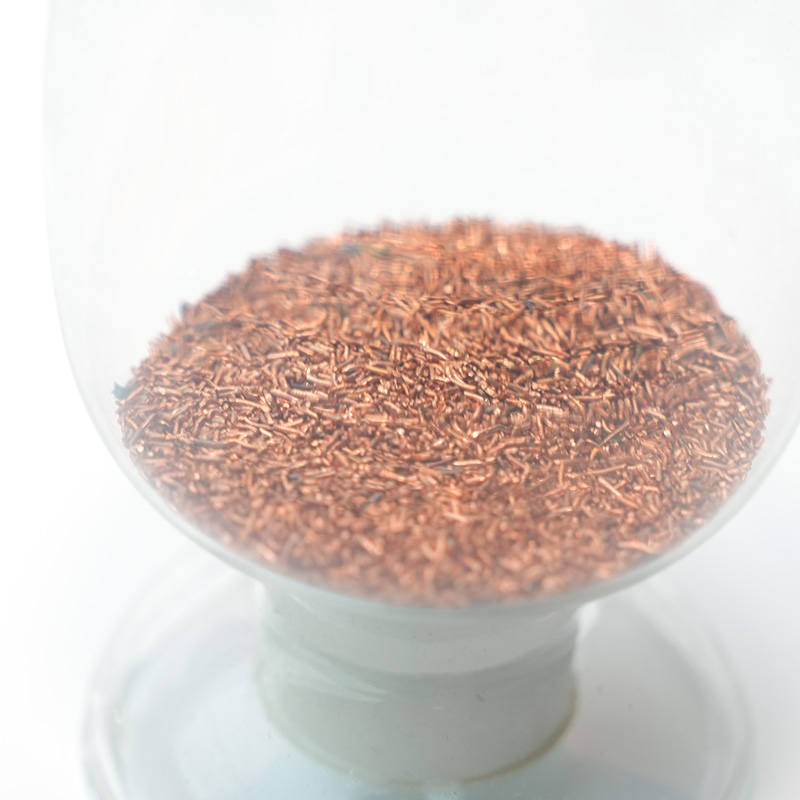 Copper Tablets for Precision Adjustment of Aluminum AlloysThese compressed copper tablets offer high recovery and rapid dispersion, helping avoid lump segregation and meet tight 0.05% composition windows in 2xxx series alloys.View Product →
Manganese is the backbone of the 3xxx series, commonly controlled between 1.0% and 1.5% in fin stock and body stock. Manganese tablets give a more consistent recovery than pure metal from heat to heat, which directly reduces off-grade charges.
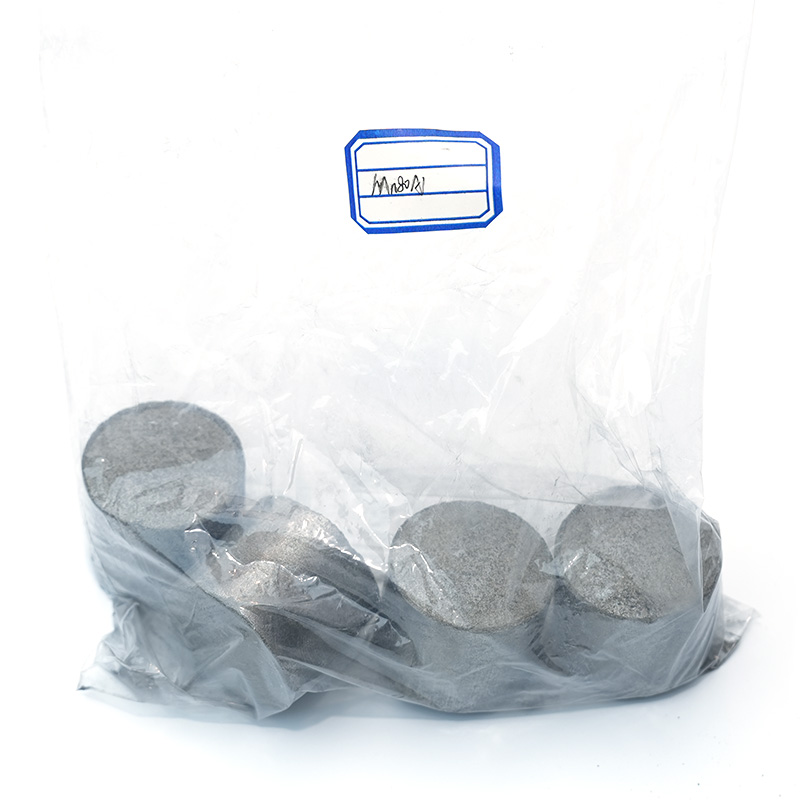 Manganese Tablets for Consistent 3xxx Series AlloyingThese manganese tablets ensure uniform recovery heat to heat, making it easier to control 1.0-1.5% manganese in fin stock and body stock while reducing off-grade charges.View Product →
Titanium is usually added in small amounts, often 0.01-0.05%, to refine the grain structure. The difficulty with such small additions is uniform distribution. Titanium tablets with a fixed mass per piece make dosing repeatable without needing to weigh each addition.
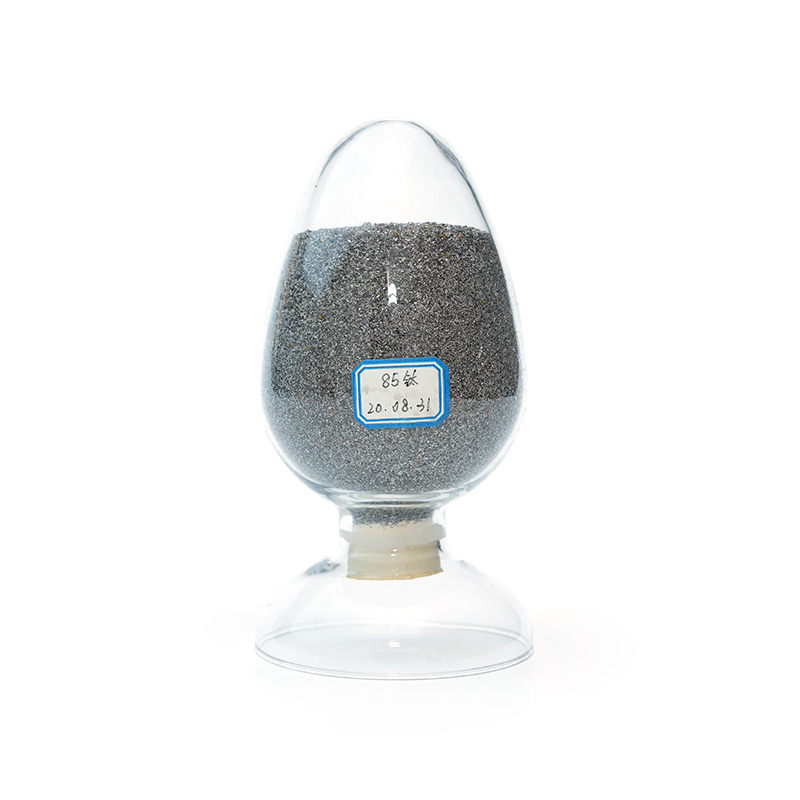 Titanium Tablets for Repeatable Grain Refinement DosingFixed-mass titanium tablets make small addition rates of 0.01-0.05% repeatable without weighing each charge, ensuring uniform grain refinement in aluminum melts.View Product →
Tablets vs. Master Alloys: What the Numbers Say
Both tablets and master alloys are reliable in production, but the recovery profile is not identical. The bar chart below compares typical recovery rates for manganese, copper, and titanium additions in these three forms.
The practical takeaways are clear. Tablets and master alloys both outperform pure metal in recovery. Tablets have a small edge in dissolution speed and dosing flexibility. Master alloys, however, introduce their own aluminum, which helps when you need extra aluminum content but complicates the calculation when the aluminum limit is already full.
For a plant that runs frequent grade changes, repeatability is the bigger cost factor. A tablet that behaves the same way in every heat shortens the adjustment time and reduces the chance of a heat being downgraded.
What to Inspect Before Buying Aluminum Alloying Additives
A low price per kilogram is not a good buying criterion if the additive fails to dissolve or the composition is inconsistent. The most common causes of off-grade batches are poor element content control, weak wettability, and packaging that allows moisture in. Before selecting a supplier, check five things.
- Composition tolerance. A product specification should state an element content range, not only a nominal value. For instance, a 75% manganese tablet should normally hold manganese within +/-1.5-2%.
- Recovery evidence. Ask for melt test results rather than a single advertised recovery number.
- Lot traceability. Each batch should be traceable to raw materials, production date, and quality records.
- Production capacity. Check whether the supplier can hold quality during peak delivery periods. A 48,000 square meters production base with automated lines is a reasonable sign of stable capacity; you can see the setup on our factory overview page.
- Management certification. Certifications such as GJB9001C indicate that quality procedures are documented and audited.
The chart below gives an idea of how melt shops typically weigh these factors when they choose an alloying additive supplier.
- Composition consistency 35%
- Recovery rate 25%
- Melting speed 15%
- Cost 15%
- Delivery reliability 10%
Frequently Asked Questions
What is the difference between an alloying additive and a master alloy?
A master alloy is a pre-melted aluminum-based alloy with a high content of one or more elements. An alloying additive tablet is a compressed mixture of metal powder, flux, and aluminum powder that dissolves in the melt. Both are used for composition adjustment, but tablets usually give more flexibility for small additions and lower cost per unit of element.
What recovery rate should I expect from alloying additive tablets?
For manganese, copper, and iron tablets, recovery is typically 92-96% in a clean, stirred melt. Titanium and chromium tablets tend to stay in the 88-93% range. Recovery drops if the melt is dirty, the temperature is too low, or the tablet is not given enough time to dissolve completely.
Can I use tablets and master alloys in the same production run?
Yes. Many foundries use a master alloy for grain refinement, such as AlTi5B1, and tablets for bulk alloying elements like manganese, copper, or iron. The important point is to track each addition separately and bring the calculated total into the target composition window.
Do alloying additive tablets have a shelf life?
Yes. The main risk is moisture absorption. If packaging is damaged, the flux fraction in the tablet becomes less effective and recovery can fall. Store tablets in a dry warehouse and follow the manufacturer's shelf-life recommendation, which is usually 6-12 months in sealed packaging.
Choosing the right aluminum alloying additive is not about picking the cheapest bag. It is about matching the element, the form, and the quality level to your furnace practice and composition targets. If you are evaluating copper, manganese, or titanium additions for a new alloy line, send your target composition and furnace details to our technical team. We will recommend a suitable tablet format and provide melt test data to back it up.
For specific inquiries, visit our contact page and include your alloy grade, furnace capacity, and current addition method.
PREV:Aluminum Alloying Tablets: Selection, Recovery Rates and Melt PracticesNEXT:How to Choose Alloying Additive Tablets for Aluminum Melting: A Practical Guide
Interested in cooperation or have questions?

- Quick Link
- HOME
- PRODUCTS
- NEWS
- SOLUTION
- CONTACT US
- Contact information
-
-
wmfan0222@163.com

-
+86-13167461999

+86-18252891222(WhatsApp) -
+86-0513-88275999

-
No.19 HeshunHaian Economic Development Zone, Nantong, Jiangsu, China

-

